
TL;DR

Get movie nights delivered free with Prime
- Fast, free delivery on millions of items
- Prime Video, Amazon Music and more included
- Member-only deals all year
The available information contains only the headline “Why Does It Feel Like Everyone Is Reading the Same Books?” It does not identify a specific event, provide evidence about reading habits, or include reporting and quotes, so the apparent trend cannot be confirmed.
The headline “Why Does It Feel Like Everyone Is Reading the Same Books?” raises a question about the books readers encounter in common, but the available material does not include the article’s reporting or evidence. It therefore does not establish that reading choices are becoming more uniform, identify particular titles, or explain what may be driving the perception.
No specific books, authors, sales figures, survey results or reading-platform data are provided. There is also no information about whether the headline refers to a particular country, age group, social network, bookstore trend or period of time. Without those details, the premise remains a question rather than a verified finding.
The material does not identify a reporter, researcher, publisher, bookseller or other person making a claim about shared reading habits. It contains no attributable quotes and no comparison with earlier reading patterns. Any explanation of why certain books may appear frequently would go beyond what can be confirmed here.
As a result, readers can take the headline as an invitation to consider a perceived pattern, not as proof that everyone—or even most readers—is choosing the same books. The distinction matters: repeated visibility in a reader’s surroundings is not, on its own, evidence of a broad change in reading behavior.
Reading culture · Evidence check
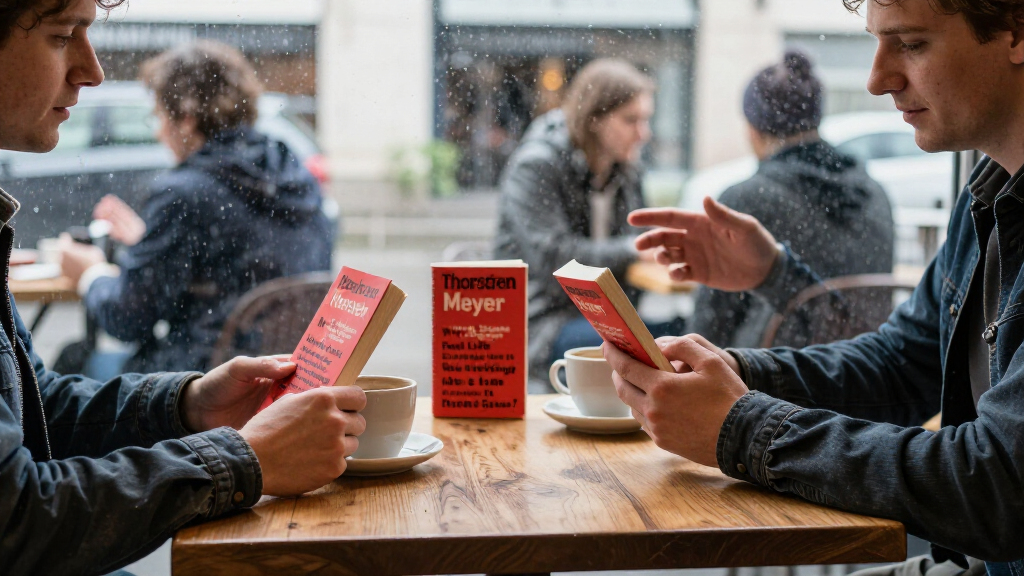
Why Does It Feel Like Everyone Is Reading The Same Books?
A headline raises a familiar question about shared reading choices. The material available here does not include the reporting or evidence needed to confirm a broader trend.
01 / What is established
The headline is a question, not a finding
The supplied material consists of a headline and a summary of what is missing. It does not establish that reading choices are becoming more uniform or that most readers share the same titles.
A perceived pattern
The headline asks why book choices may seem to overlap. It invites inquiry but does not confirm the premise.
No titles or readers
No specific books, authors, country, age group, community, platform, or time period are named.
No evidence or cause
There are no sales figures, survey results, borrowing records, platform data, quotes, or comparisons.
02 / How to assess the claim
Visibility is not a reading survey
Seeing a familiar title in conversations, recommendations, or displays may describe a local experience. It cannot, by itself, show how widely a book is read.
Define the group
Specify whose reading choices are being discussed.
Set the time
Name the period and the baseline for comparison.
Show the measure
Use surveys, sales, library borrowing, or platform activity.
Explain its limits
Clarify what the evidence can and cannot represent.
03 / Evidence status
What we can—and cannot—measure here
The question may resonate with people who notice repeated titles in their own circles. Personal experience does not necessarily represent readers elsewhere.
04 / Questions still open
What full reporting would clarify
The original article, its author, publication date, named examples, and cited sources were not available in the supplied material.
Does this prove everyone reads the same books?
No. The headline poses a question; it provides no data establishing a shared reading pattern.
Which books are being discussed?
No titles are named, so the books in question cannot be identified.
What is driving the perceived overlap?
No cause is reported. Explanations such as publicity or recommendations would be speculative here.
What could support a broader claim?
Evidence would need a defined population and time window, plus relevant survey, sales, or borrowing data.
Traceability / From headline to conclusion
Keep the claim in proportion
Repeated visibility can prompt a question. Only defined, comparable evidence can establish the scale of a reading trend.
Visibility Is Not a Reading Survey
The question matters because readers often use the books they see around them to judge what is popular. Yet a familiar title appearing in conversations, recommendations or displays would not establish how widely it is being read. A reliable account of a trend would need to define the group being discussed and show evidence such as sales, library borrowing, reader surveys or platform activity, with a stated time period and comparison.
Without that information, the headline cannot support conclusions about whether readers have fewer distinct choices, whether publishers are promoting a narrower range of books, or whether recommendation systems are concentrating attention. Those are possible lines of inquiry, not confirmed explanations in the material available. Keeping that distinction clear helps readers avoid treating a feeling of repetition as a measured industry-wide shift.
The question may still resonate with people who notice the same titles in their own circles. But personal experience can reflect a particular community or set of recommendations. It does not necessarily represent readers elsewhere. Here, the key takeaway is limited: a perception is being raised, but its scale and cause are unknown.
popular contemporary fiction books
As an affiliate, we earn on qualifying purchases.
As an affiliate, we earn on qualifying purchases.
What the Headline Establishes
The supplied item consists of a headline only; the article body could not be extracted. That means no publication date, location, named example or underlying evidence is available to place the question in a timeline. It is not possible to determine whether the headline refers to a current bestseller list, a viral book discussion, a publishing report or a broader cultural observation.
Those distinctions would shape the story. A list of popular titles measures a different thing from books readers discuss online, and neither automatically captures what people are reading in private. Likewise, a claim about a change over time would require an earlier baseline and a defined period. None is included here, so no trend or comparison can be responsibly stated.
As an affiliate, we earn on qualifying purchases.
The Evidence Still Missing
The available information does not answer which books are being discussed, who is noticing the pattern, or how many readers it involves. It also does not say whether the observation is based on sales, borrowing, online recommendations, social conversation or personal experience. No evidence is provided to show whether the pattern is new or how it compares with previous years.
There is no confirmed explanation for the impression described by the headline. Factors such as word of mouth or recommendation systems cannot be presented as causes here, because no reporting connects them to this particular claim. The original article’s full text, author, publication date and any cited sources are also unavailable.
As an affiliate, we earn on qualifying purchases.
Full Reporting Would Clarify the Claim
The next step would be access to the full article or to reporting that identifies the books and provides its evidence. Readers would need to know the population, geography and time window being discussed, as well as the basis for any comparison. If the article cites surveys, sales rankings or borrowing figures, those methods and limits would help show what the numbers can—and cannot—say.
Until those details are available, the question remains open rather than a confirmed report of a shift in reading habits. This account does not predict a later finding or assign a cause; it records what can be established from the headline and what remains unverified.
Source: rss
As an affiliate, we earn on qualifying purchases.
Key Questions
Does the available information prove that everyone is reading the same books?
No. It provides a headline posing that question, but no data or reporting that establishes a shared reading pattern.
Which books does the headline refer to?
No titles are named in the available material, so the books in question cannot be identified.
What is causing the perceived overlap in reading choices?
No cause is reported. Explanations involving recommendations, publicity or word of mouth would be speculative without the article’s evidence.
What information would confirm a broader trend?
Reporting would need to define which readers and time period it covers and provide relevant evidence, such as survey results, sales or library borrowing data.
Source: rss
Fall Picks
fall essentials
As an affiliate, we earn on qualifying purchases.