
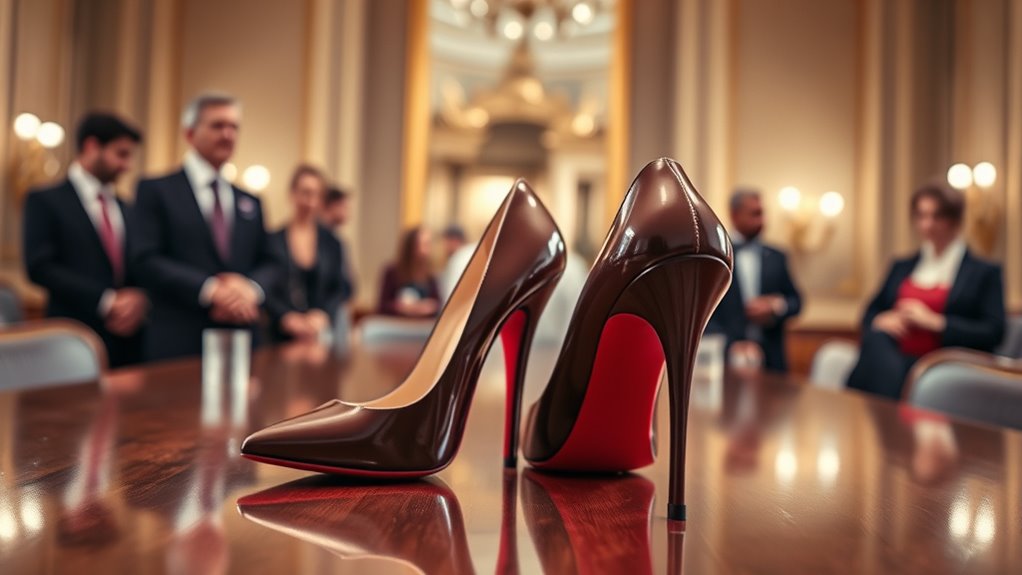

When fashion icons like Christian Louboutin sue over red sole trademarks, it’s about protecting their iconic style and brand identity. Louboutin’s battles, like with Zara and YSL, highlight how courts around the world view the legal protection of color in fashion—sometimes recognizing secondary meaning, sometimes invalidating claims. These disputes can shape industry standards on trademarking design elements. If you’re curious about how these high-stakes conflicts unfold and influence fashion, there’s more to explore.
Key Takeaways
- Christian Louboutin secured a trademark for his distinctive red sole in 2000 to protect his brand identity.
- Legal disputes arose when brands like Zara and YSL used similar red soles, leading to court battles over infringement.
- French courts initially invalidated the trademark, citing lack of distinctiveness and concerns over monopoly on the color red.
- U.S. courts permitted trademark protection if the red sole contrasted with non-red shoes, leading to successful legal claims.
- Internationally, Louboutin registered specific Pantone red and won over 40 legal cases, shaping global fashion branding laws.
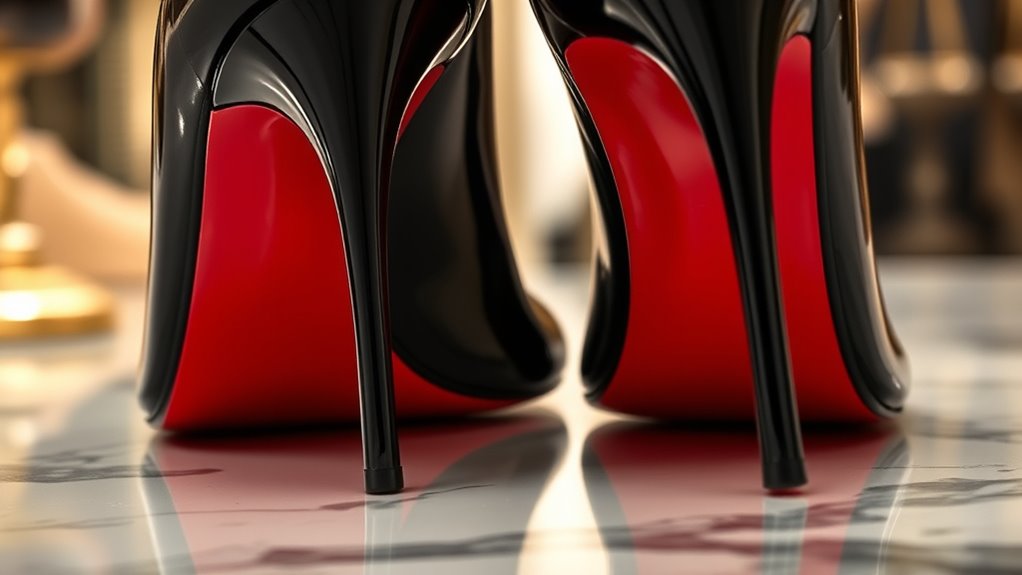
Fashion Icon Lawsuits
The battle over the iconic red sole has become a defining clash in fashion law. You might think a color is just a design element, but in Christian Louboutin’s case, it’s a trademark worth millions. Back in 2000, Louboutin secured a French trademark specifically for his signature red sole, aiming to protect the distinctive look of his luxury shoes. But that wasn’t the end of the story. When Zara France released shoes with red soles similar to Louboutin’s Yo-Yo design, he sued for unfair competition and trademark infringement. The Paris Court initially ruled Zara had to pay damages, but it didn’t recognize Louboutin’s trademark as valid, citing no likelihood of confusion due to differences in pricing and market segments. On appeal, the court went further, invalidating Louboutin’s trademark for lack of distinctiveness and rejecting claims of unfair competition to prevent creating a monopoly on the color red.
Louboutin’s legal battles didn’t stop there. He also sued Yves Saint Laurent (YSL) in New York, alleging YSL’s red-soled shoes infringed on his trademark rights. Louboutin argued that YSL’s similar shoes damaged his brand’s reputation and goodwill. Despite Louboutin’s requests to stop, YSL continued selling red-soled shoes, leading to a preliminary injunction that was denied. The court ruled that color marks are functional and didn’t see a clear trademark infringement, but Louboutin appealed, asserting his rights to the red sole. The US courts eventually ruled that red soles could be trademarked, provided the rest of the shoe wasn’t entirely red. YSL’s all-red shoes were allowed to be sold, marking a partial win for Louboutin. Support from Tiffany & Co. bolstered the argument that colors can be trademarked, and Louboutin refined his trademark to specify the Pantone 18-1663TP red applied solely to the shoe’s outsole. This refinement strengthened his legal standing and helped defend his design worldwide.
Protecting a single color as a trademark isn’t straightforward. Red soles have been around for centuries as a fashion ornament, making some opponents argue they aren’t distinctive enough for exclusive rights. Courts have debated whether such trademarks are functional or merely decorative, with US and French courts taking different stances. Louboutin’s ongoing litigation reveals how complex it is to defend color-based trademarks in fashion, especially when the design is so deeply embedded in history and style. To safeguard his iconic look, Louboutin registered his red sole trademark in around 50 countries and won over 40 legal battles internationally. He also registered a specific Pantone red, adding a standard that bolsters his claims. In 2012, the Second Circuit recognized Louboutin’s red sole as having acquired secondary meaning, giving him broader legal protection. Courts often consider various factors, including color trademark criteria, when determining the validity of such claims, highlighting the nuanced legal landscape. Still, enforcement varies by jurisdiction, and courts sometimes invalidate or limit protection, making his legal fight ongoing. These disputes influence not just high fashion but also the fast fashion sector, as brands like Zara face lawsuits over red soles resembling Louboutin’s signature style. Courts often consider the market segment and price differences to determine whether such similarities amount to infringement, underscoring the delicate balance between creativity, branding, and legal protection in the fashion industry.

GADEBAO Red Sole Protectors, 4 Pcs Self-Adhesive Shoe Bottom Protector for Christian Louboutin High Heels, Silicone Anti Slip Shoe Grips Compatible with Louboutin Shoes (M, 6" by 4", Red)
Preserves the value of your investment: Your red sole heels are an investment, and our red bottom shoe…
As an affiliate, we earn on qualifying purchases.
As an affiliate, we earn on qualifying purchases.
Frequently Asked Questions
How Often Do Christian Louboutin Lawsuits Occur?
You might wonder how often Christian Louboutin files lawsuits. They don’t happen constantly but are strategic and sporadic, usually when the brand perceives infringement of its red sole trademark. Since 2012, Louboutin has sued several brands like Yves Saint Laurent and others to protect its mark. While not daily or weekly, their legal actions are significant and carefully timed to maintain their exclusive rights over the iconic red sole.
Are Red Soles Trademarked Globally or Only in Certain Countries?
Oh, so you think red soles are universally trademarked? Think again! You’ll find that protection varies wildly—some countries like the EU and Brazil recognize it as a trademark, while others like Japan and Switzerland are more skeptical. It’s not a global patent party; it’s more like a patchwork quilt of legal opinions. So, if you’re planning to sport those iconic shoes worldwide, beware—trademark status isn’t guaranteed everywhere.
Can Consumers Legally Purchase Red-Soled Shoes From Other Brands?
You can buy red-soled shoes from other brands legally if they don’t infringe on Louboutin’s trademark or patent rights. As long as these shoes don’t copy the specific red shade, design elements, or create consumer confusion, you’re safe. Lower-priced alternatives targeted at different markets are less likely to cause legal issues. Just watch out for deliberate copying, which could lead to counterfeit claims or infringement risks.
What Are the Financial Implications of Losing a Lawsuit?
Losing a lawsuit hits your finances hard, with hefty damages and legal fees draining your resources. While you might see short-term revenue loss from court orders and product bans, the real blow is long-term—brand damage, weakened protections, and diminished market value. The emotional toll of a defeat can be overwhelming, making you rethink your strategies. Ultimately, failure in court can jeopardize your business’s future and your peace of mind.
How Do These Disputes Impact Louboutin’s Brand Reputation?
You see, these disputes can considerably influence Louboutin’s reputation. High-profile lawsuits boost brand awareness and reinforce its image as a protector of luxury and exclusivity. However, prolonged legal battles may lead to controversy or perceived overreach, risking public backlash. Ultimately, successful enforcement solidifies the red sole’s status, but losses or negative publicity might weaken consumer trust and challenge the brand’s premium positioning in certain markets.
Pantone red outsole shoes
As an affiliate, we earn on qualifying purchases.
As an affiliate, we earn on qualifying purchases.
Conclusion
So, next time you admire those iconic red soles, remember they’re at the heart of a fierce battle that could shake the fashion world to its core. These lawsuits aren’t just about shoes—they’re about protecting identity, creativity, and legacy. Stay tuned, because what’s at stake is bigger than a single color; it’s a battle for artistry itself. In this fight, the red sole isn’t just a detail—it’s a symbol worth defending with every ounce of passion you’ve got.

sexyprom Women's 3.9IN Pointed Toe Stiletto Pumps Shoes Elegant High Heels for Party Wedding Banquet Red US7
【Elegant Design – Timeless Pointed Toe】 Sleek pointed-toe design enhances your leg line and adds a sophisticated touch,…
As an affiliate, we earn on qualifying purchases.
As an affiliate, we earn on qualifying purchases.

GotSoft Womens Mary Jane Flats Closed Square Toe Ballet Flat Dressy Comfortable Slip on Shoes, Red, Size 8
Material: Faux Leather. Buy these guilt-free,knowing your purchase is making no dent in the environment
As an affiliate, we earn on qualifying purchases.
As an affiliate, we earn on qualifying purchases.