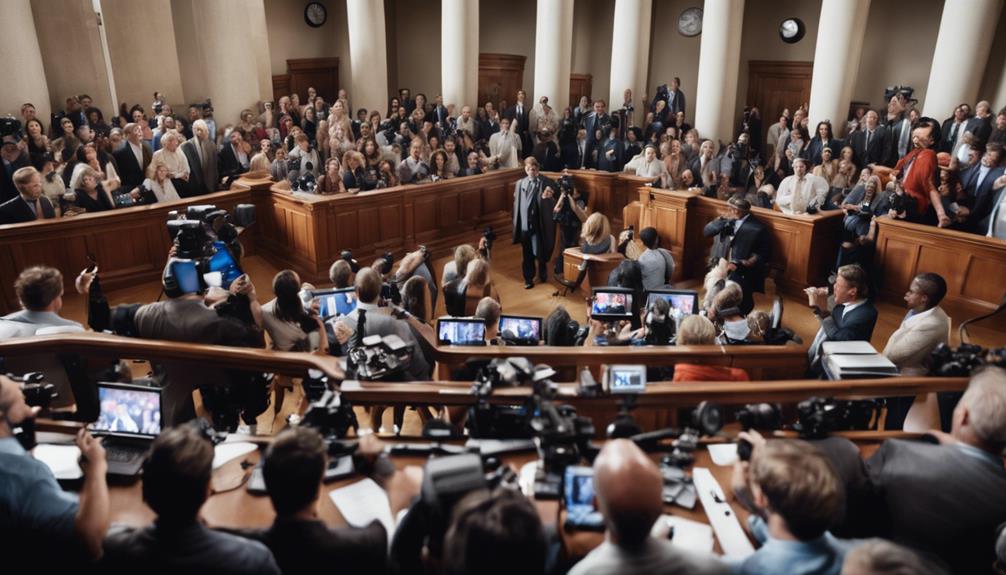


The lawsuit Drake filed against UMG over Kendrick Lamar’s lyrics was dismissed because courts recognize diss tracks as protected artistic expression, especially when lyrics are viewed as hyperbole or metaphor. The judge ruled that provocative language and exaggerated imagery are normal in hip-hop and don’t usually qualify as defamation. This decision highlights how legal systems value free speech and artistic freedom, and if you want to explore how it could impact future cases, keep going.
Key Takeaways
- The lawsuit was dismissed due to lyrics being protected as artistic hyperbole and free speech under the First Amendment.
- The court emphasized that diss tracks often use exaggerated, metaphorical language not intended as factual.
- Lyrics were viewed as performative art, with audiences unlikely to interpret them as literal accusations.
- The ruling reinforces that hyperbolic and provocative lyrics in music, especially rap, are legally protected.
- This decision sets a precedent favoring artistic expression and complicates future defamation claims based on lyrical content.

Lyric Legend 90s Hip-Hop and Rap Music Trivia – Adult Games for Game Night – Good for Groups – Finish The Lyrics Party Game – Multiple Choice, Listen While You Play with Included Playlist!
Lyric Legend is the perfect game to see who knows their 90's Hip-Hop and Rap lyrics! Get quizzed…
As an affiliate, we earn on qualifying purchases.
As an affiliate, we earn on qualifying purchases.
Background of the Drake vs. UMG Legal Battle

The legal battle between Drake and UMG began in 2025 after a highly publicized rap feud between Drake and Kendrick Lamar. During their spring 2024 diss track exchange, Lamar released “Not Like Us,” which included explicit allegations claiming Drake was a pedophile. Since both artists were signed to UMG, the company promoted the song widely. Drake’s team argued that UMG knowingly published and promoted defamatory content, causing him harm. They claimed the lyrics falsely accused him and damaged his reputation. UMG defended the song as artistic expression protected by free speech. The lawsuit marked a rare legal challenge involving a major record label over lyrical content. It drew significant attention to issues of defamation, artistic freedom, and the boundaries of free speech in music.

The Musician's Guide to Music Copyright Law: The Definitive Resource for Musicians to Music Copyright Law (1)
As an affiliate, we earn on qualifying purchases.
As an affiliate, we earn on qualifying purchases.
Details of the Disputed Lyrics and Allegations

You might wonder what specific lyrics sparked the controversy, especially the claims that accused Drake of being a pedophile. The song “Not Like Us” used provocative language and metaphorical statements that critics argued crossed the line into defamation. However, the court emphasized the context of hyperbole and artistic expression, showing that the lyrics were part of a diss track culture rather than factual accusations. Recognizing the importance of artistic expression can help clarify the intent behind such content and reduce misunderstandings among audiences. Furthermore, courts often consider the vetted nature of artistic content, which is designed to provoke thought rather than serve as factual testimony. Courts also evaluate the public perception of the artist and the work to determine whether statements are likely to be understood as statements of fact or opinion. In addition, understanding the legal standards for defamation claims helps frame why the lawsuit was dismissed.
Alleged Defamatory Claims
During the rap battle between Drake and Kendrick Lamar, Lamar’s diss track “Not Like Us” included provocative lyrics that became the core of Drake’s defamation lawsuit. Lamar accused Drake of serious misconduct, metaphorically suggesting he’s a pedophile, which Drake claims is false and damaging. The lyrics used vivid imagery and hyperbole to criticize Drake’s character. You need to understand the specific language Lamar used, including phrases that implied criminal behavior without stating it outright. These allegations, though framed as artistic expression, directly targeted Drake’s reputation. The controversy centered on whether these lyrics conveyed fact or opinion. The court ultimately viewed the lyrics as exaggerated hyperbole, not factual claims, dismissing the lawsuit.
- Use of metaphorical language implying criminal behavior
- Vivid imagery depicting moral corruption
- Lyrics emphasizing personal attack over factual reporting
- Allegations framed as artistic hyperbole, not literal accusations
- Cultural context of diss tracks as provocative and exaggerated
Artistic Hyperbole and Context
Lamar’s lyrics in “Not Like Us” rely heavily on metaphorical language and vivid imagery to criticize Drake’s character. You should recognize that the song uses hyperbole to convey artistic emotion rather than factual accusations. The lyrics blend insults, threats, and exaggerations typical of rap diss tracks, emphasizing style over literal truth. Here’s a breakdown of the lyrical context:
| Lyric Element | Description | Impact |
|---|---|---|
| Metaphors | Comparing Drake to a predator | Creates vivid imagery, not factual claim |
| Violent Imagery | References to fists and threats | Emphasizes intensity, not literal violence |
| Exaggeration | Over-the-top accusations | Reinforces artistic expression |
| Cultural Norms | Diss track conventions | Recognized as typical in genre |
| Audience Interpretation | Not taken as literal by average listener | Protects against defamation claims |
Additionally, the use of exaggerated imagery aligns with artistic hyperbole common in rap battles, further reinforcing that these lyrics are meant as creative expression rather than factual assertions. You should also consider the cultural norms within hip-hop, which often accept such language as part of the genre’s expressive style. This approach is consistent with hip-hop lyricism, where exaggerated language is widely accepted and expected in diss tracks. Moreover, understanding the role of artistic expression in music helps clarify why such lyrical exaggeration is a recognized feature of the genre.

Podcast Equipment Bundle, BM-800 Recording Studio Package with Voice Changer, Live Sound Card – Audio Interface for Laptop Computer Vlog Living Broadcast Live Streaming YouTube TikTok (AM100-V8)
Professional Podcast Equipment Bundle – The Podcast Equipment Bundle is equipped with BM-800 microphone, Mic adjustable suspension scissor…
As an affiliate, we earn on qualifying purchases.
As an affiliate, we earn on qualifying purchases.
The Court’s Ruling and Rationale Behind the Dismissal

The court’s ruling centered on applying the “opinion” defense, recognizing that the lyrics are protected artistic expression. It emphasized that, within the context of diss tracks, exaggerated language is expected and not considered factual. This decision highlights how the legal system views provocative artistic content as shielded from defamation claims when framed as hyperbole. Additionally, the ruling underscores the importance of copyright and affiliate disclosure in maintaining transparency and protecting creative works. The case also reflects broader legal principles related to content moderation and free speech protections within artistic expression. Moreover, the decision illustrates how artistic expression interacts with legal standards in the digital age. The ruling demonstrates the need for a nuanced understanding of how free speech rights are balanced against potential defamation claims in creative contexts.
Opinion Defense Applied
The court’s decision to dismiss Drake’s defamation claim hinges on its recognition that rap lyrics are protected as statements of opinion rather than factual assertions. You should understand that legal protections for opinion allow artists to express exaggerated or hyperbolic ideas without fear of liability. The court emphasized that lyrics in diss tracks often use figurative language, making them nonactionable. It also highlighted that the average listener would not interpret these lyrics as literal truth. This application of the opinion defense underscores the importance of artistic expression in artistic and cultural norms, reinforcing the idea that such lyrics are protected speech. Recognizing the freedom of speech rights of artists further supports the court’s stance on protecting creative and expressive content. The ruling affirms that expressive content in music is fundamental to free speech protections, especially when it involves artistic and cultural commentary. Moreover, the case illustrates how encryption solutions can protect sensitive creative works from unauthorized access, ensuring artists can freely express themselves without undue concern over legal repercussions. This case exemplifies the balance between legal accountability and safeguarding artistic freedom in the music industry.
Artistic Expression Protected
Because the court recognized the expressive nature of rap lyrics, it ruled that UMG’s promotion of “Not Like Us” is protected as artistic expression. The judge emphasized that rap diss tracks often use hyperbole, metaphor, and exaggeration, which are integral to the genre. These lyrics function as a form of artistic storytelling rather than factual assertions. The court noted that listeners understand diss tracks as performative and provocative, not literal accusations. By framing the lyrics as hyperbolic and part of artistic expression, UMG’s promotion falls within protected speech. This ruling underscores that creative works, especially in music and rap, are entitled to a broad First Amendment shield, even if they contain controversial or offensive content. Additionally, recognizing the importance of artistic freedom helps safeguard diverse forms of cultural expression. The decision highlights the significance of creative expression in fostering a vibrant and dynamic musical landscape, which is essential for promoting cultural diversity and innovation in the arts.
Context of Diss Tracks
The court’s ruling recognizes that diss tracks are a distinctive form of artistic expression within hip-hop culture, inherently designed to be provocative and exaggerated. You should understand that these songs often blur the line between truth and hyperbole, serving as performative insults rather than factual claims. The court emphasized that listeners typically interpret diss tracks as part of a competitive tradition rooted in entertainment, not literal accusations. This cultural context supports the idea that lyrics are meant to be hyperbolic and stylized. The ruling suggests that legal standards must consider the genre’s unique nature. Recognizing this helps explain why the court dismissed the case, affirming that such lyrics fall under protected opinion, not defamation.
- Emphasizes the performative and competitive nature of diss tracks
- Highlights the exaggeration and hyperbole common in lyrics
- Notes the cultural tradition of lyrical insults in hip-hop
- Clarifies that listeners understand diss tracks as entertainment
- Explains legal boundaries between opinion and factual claims

Expressions of Faith: 8 Inventive Explorations of Classic Hymns for Solo Piano: Advanced Piano
As an affiliate, we earn on qualifying purchases.
As an affiliate, we earn on qualifying purchases.
Artistic Expression and the Role of Hyperbole in Diss Tracks

Artistic expression in diss tracks relies heavily on hyperbole to convey intensity and rivalry. You understand that artists often exaggerate to make their points more impactful, emphasizing emotions and conflicts. Hyperbole helps create a sense of drama and stakes, engaging listeners without suggesting literal truth. In the context of rap battles, these exaggerated insults and threats are part of a performative tradition, meant to entertain and provoke. When courts evaluate such lyrics, they recognize that hyperbolic statements are protected as artistic expression, not factual claims. This distinction is vital because it prevents overly literal interpretations of provocative language. By embracing hyperbole, artists like Drake and Kendrick Lamar craft compelling narratives that reflect rivalry while maintaining legal protections for their creative freedom.
Impact on the Music Industry and Creative Freedom

The dismissal of Drake’s defamation lawsuit marks a significant milestone for the music industry, reaffirming artists’ right to push creative boundaries without fear of legal repercussions. It underscores the importance of artistic expression, especially in genres like rap where hyperbole and provocative lyrics are standard. This ruling may encourage artists to be more daring, knowing courts recognize the line between opinion and fact. However, it also highlights the need for clarity in lyric interpretation, preventing misuse of legal claims to censor or silence dissent. Artists and labels might now feel more confident exploring controversial themes. Yet, this case also raises questions about accountability and the potential for harmful content to evade defamation suits. Ultimately, the decision balances protecting free expression with safeguarding reputations in a complex cultural landscape.
- Reinforces the legal protection of hyperbolic and provocative lyrics
- Encourages more daring and experimental artistic content
- Raises awareness about the importance of context in lyrics
- Influences how artists approach controversial topics
- Sparks ongoing debate over boundaries between opinion and factual claims
Potential Next Steps and Implications for Future Cases

With the court’s dismissal of Drake’s defamation lawsuit, attention now shifts to how future cases might unfold and what legal standards will be applied moving forward. You should note that courts may increasingly rely on the “opinion” defense, especially in artistic contexts like music or satire. To understand potential implications, consider this table:
| Aspect | Potential Impact | Key Considerations |
|---|---|---|
| Legal Standards | Greater protection for hyperbolic expressions | Differentiating fact from opinion |
| Artistic Expression | Courts may uphold creative freedom | Evaluating context and audience perception |
| Litigation Strategy | Plaintiffs might face higher hurdles in alleging defamation | Focus on clear factual falsehoods |
| Industry Norms | Encouragement of provocative, performative content | Balancing free speech with legal boundaries |
| Future Precedent | Could set a precedent favoring artistic exaggeration | Impacts how defamation claims are framed |
This shift could substantially influence how artists and labels approach controversial content legally.
Legal Principles and Precedents Shaping the Outcome

Legal principles and precedents played a crucial role in shaping the court’s decision to dismiss Drake’s defamation claim. The court relied heavily on established legal standards that protect artistic expression, especially in the context of music and diss tracks. It emphasized that statements in lyrics are often hyperbolic, subjective opinions rather than factual assertions. The “opinion” defense, a key precedent, shields artists when their work contains exaggerated language meant for entertainment. Courts have long recognized that diss tracks and similar cultural expressions are expected to include some level of exaggeration and are not meant to be taken literally. This legal framework ensures creative freedom while balancing protections against defamation. Ultimately, these principles led to the ruling that the lyrics weren’t actionable as false statements.
Courts protect artistic expression by deeming lyrics hyperbolic opinions, ensuring creative freedom with safeguards against defamation.
- The “opinion” defense in defamation law protects hyperbolic and subjective statements.
- Courts differentiate between factual claims and artistic or expressive opinions.
- Precedents establish that diss tracks are cultural expressions with exaggerated content.
- Artistic expression enjoys broad legal protections, even if controversial or offensive.
- The context of rap battles influences how lyrics are legally interpreted and evaluated.
Frequently Asked Questions
Could This Dismissal Influence Future Defamation Lawsuits Involving Artists?
This dismissal could substantially impact future artist defamation cases. You should know it reinforces that hyperbolic, artistic expressions like diss tracks are protected as opinion, not factual statements. If you’re involved in a lawsuit over lyrics or creative content, courts may view exaggerated language as part of artistic freedom. However, you must be aware that clear factual claims might still be subject to defamation laws, so context and intent matter greatly.
What Specific Legal Standards Differentiate Opinion From Factual Claims in Music Lyrics?
You should know that courts differentiate opinion from factual claims by examining whether the lyrics imply verifiable facts or subjective expression. If lyrics are hyperbolic, exaggerated, or figurative, they’re protected as opinion. When lyrics are presented as statements of fact that can be proven true or false, they might be considered defamatory. The context and artistic intent are key factors that help courts determine the distinction.
How Might This Case Affect Artists’ Freedom to Use Provocative Language?
This case could massively broaden artists’ freedom to push boundaries with provocative language. You might think it’s just a rap battle, but courts now recognize that hyperbolic, exaggerated lyrics are protected as artistic expression. This ruling sends a clear message: artists can craft incendiary, controversial content without fearing defamation lawsuits, as long as it’s understood as opinion, not factual claims. Expect more daring creativity, knowing legal limits are now more lenient.
Are There Any Circumstances Under Which Similar Lyrics Could Lead to Legal Action?
You could face legal action if lyrics are presented as factual statements rather than hyperbolic or artistic expressions. If your lyrics include specific, verifiable claims that harm someone’s reputation and are not clearly opinion or satire, courts might consider them defamatory. Always be cautious when making concrete allegations, especially if they can be proven false, as this could lead to lawsuits despite the protections for artistic expression.
What Role Does Audience Perception Play in Defamation Claims Related to Artistic Works?
Think of the audience as the lens through which the truth is viewed. Their perception heavily influences defamation claims in art, because if they interpret lyrics as factual, legal trouble can arise. You must realize that courts often consider whether an average listener would take the content literally. Artistic expression is protected when it’s seen as hyperbole or opinion, but audiences’ perceptions can blur those boundaries, shifting the line from protected speech to potential defamation.
Conclusion
This case is like a tightrope walk over a legal minefield, where artistic expression faces serious scrutiny. While the dismissal keeps the spotlight on creative freedom, it also reminds you that words can have legal weight. As the courtroom drama concludes, remember that artists must balance their right to speak freely with the boundaries of defamation laws. Ultimately, this ruling sets a precedent, shaping the future landscape of music and free expression.