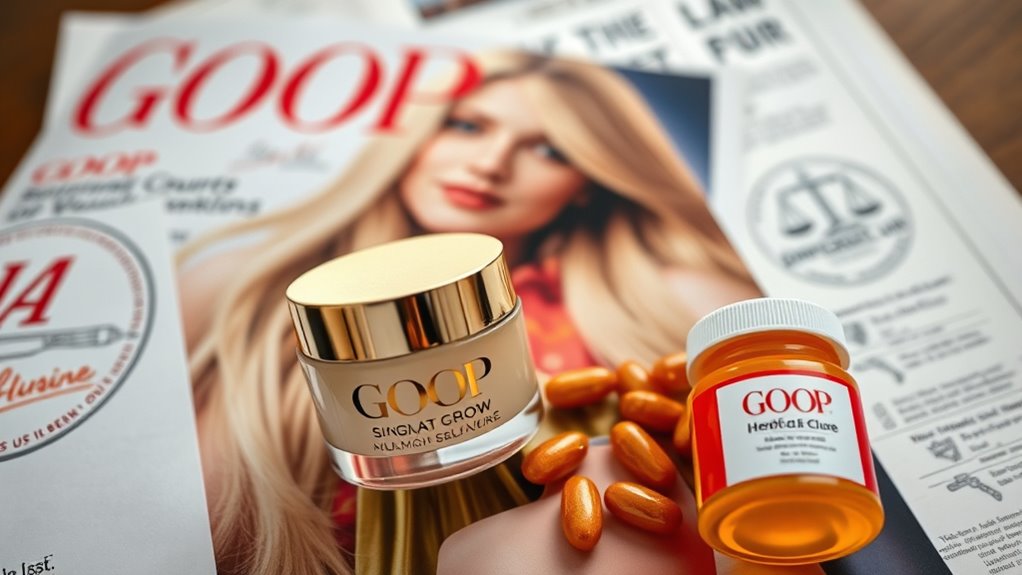

Gwyneth Paltrow’s Goop has faced lawsuits accusing it of false advertising, especially over health and wellness claims that lack scientific support. Courts scrutinize whether ads mislead consumers by exaggerating benefits or making unsubstantiated statements. If you want to understand how Hollywood studios and celebrities navigate laws to avoid legal trouble and what happens when promises cross the line, you’ll discover more about the legal battles behind the scenes.
Key Takeaways
- Goop has faced multiple lawsuits over false health claims, alleging deceptive advertising of wellness products.
- Courts scrutinize whether Goop’s marketing implies unsubstantiated benefits, risking violations of consumer protection laws.
- Gwyneth Paltrow’s endorsements have been challenged when products allegedly misled consumers about efficacy.
- Legal actions highlight the importance of truthful advertising and the risks of using celebrity images without proper authorization.
- Regulatory agencies and courts aim to protect consumers and celebrities from misleading claims in Hollywood-endorsed products.

False advertising in Hollywood isn’t just about misleading trailers or exaggerated claims; it also involves deceptive practices that can fool viewers into expecting things that never materialize. When it comes to movies and celebrity-endorsed products, this deception can take many forms, from misrepresenting an actor’s role to making False claims about a product’s benefits. In the case of movies, trailers can imply the presence of stars who aren’t actually in the film, leading audiences to buy tickets based on those False impressions. Courts use the “reasonable consumer” standard to determine if a typical viewer would be misled by such advertising. This means that if an average person might believe a trailer’s False implication, the studio could face legal trouble. Studios often argue that trailer content is “creative expression,” but courts tend to see it as commercial speech designed to generate profit, especially when the advertising clearly promotes a specific film.
Legal cases, like the 2022 lawsuit against Universal City Studios over the film “Yesterday,” exemplify how misleading trailers can lead to legal disputes. In this case, plaintiffs claimed they paid to see the movie under the False impression that Ana De Armas starred in it, based on trailer representations. Despite the studio’s efforts to dismiss the case, the court allowed it to proceed, emphasizing that trailer depictions can be deceptive if they suggest something untrue. The focus in such cases is whether the advertising violated consumer protection laws by implying False facts or misleading the audience. Outcomes often hinge on whether the evidence shows that consumers were genuinely duped and if the studio’s intent was to profit from the misrepresentation.
Outside the film industry, False advertising claims extend into celebrity-branded consumer products. Examples include exaggerated health claims about wellness products or unsubstantiated efficacy statements. Companies like Skechers paid hefty fines—$40 million in one case—for making unsupported health claims about their toning shoes, highlighting how regulatory authorities scrutinize such advertising. These cases serve as warnings for Hollywood stars and brands that associate their name with products promising health or lifestyle benefits. They demonstrate that courts and regulators are increasingly vigilant about preventing consumer deception, especially when celebrity likenesses or endorsements are involved. Research shows that only about a third of consumer ads are completely truthful; most contain exaggerations, omissions, or half-truths. This pattern makes it easy for viewers to be misled, especially in health, wellness, and lifestyle markets. When celebrities are involved, the risk of False advertising claims rises further. Unauthorized use of a star’s image or endorsement can lead to lawsuits, as celebrities object to their likeness being exploited for misleading or unapproved products. Courts are paying closer attention to such cases, recognizing that the reputation and image of Hollywood stars can be damaged by False claims associated with their name or likeness. Additionally, the vetted standards for safe products, including those endorsed or used by celebrities, emphasize the importance of truthful advertising to protect consumers.
Frequently Asked Questions
How Do False Advertising Laws Differ Across States?
You’ll notice that false advertising laws vary across states. Some states let both consumers and competitors sue for false claims, while others require proof of actual harm or damages first. Penalties and enforcement methods differ too, with some states imposing hefty fines or criminal charges, and others relying more on private lawsuits. You should check your state’s specific rules, as enforcement and remedies aren’t the same everywhere.
What Penalties Do Companies Face for False Advertising?
You face serious consequences for false advertising—it’s not just a slap on the wrist! The FTC can hit you with civil penalties up to $50,120 per violation, sometimes totaling millions if you’re caught in big scams. Plus, you might be ordered to stop misleading claims and pay restitution to consumers. Regulatory agencies can also impose fines or criminal charges, damaging your reputation and business long-term. Stay truthful or risk facing hefty penalties.
Can Consumers Sue for False Advertising Without Proof of Harm?
You might wonder if you can sue for false advertising without proving harm. Under federal law, you don’t need to show actual damages—just demonstrate that the false or misleading statements are likely to deceive a substantial part of the audience and influence purchasing decisions. Courts focus on the potential for harm, not documented losses, so you can pursue legal action even if you haven’t experienced direct financial harm yourself.
How Does Social Media Influence False Advertising Claims?
Social media acts like a wildfire, spreading false advertising claims rapidly. You’re often encouraged to share sensational content for quick likes and comments, making it easy to fall for misleading ads. Verified users and influential accounts amplify fake claims, while platform algorithms prioritize engagement over truth. This environment fuels misinformation, making it harder for you to discern fact from fiction, increasing vulnerability to deceptive product claims and false advertising.
Are Celebrities or Influencers Held Accountable for False Claims?
You might wonder if celebrities or influencers get held accountable for false claims. Usually, the law targets companies, not the celebrities directly, unless they’re knowingly involved in fraud. While celebrities can be sued for using someone’s likeness without permission, most legal penalties are paid by companies, not endorsers. However, influencers must disclose their connections honestly, and if they knowingly promote false info, they can face legal consequences.
Conclusion
So, stay skeptical and scrutinize every statement they make. Don’t be dazzled by dazzling dollars or deceptive dreams. Remember, truth takes tenacity; it’s your right to demand honesty. Hollywood’s hype may hide hazards, but your vigilance vanquishes falsehoods. By questioning, you prevent deception and promote integrity. Keep your curiosity keen, and let clarity conquer confusion. In this enthralling chase for credibility, your conscious consumer choices create change—because awareness is your ultimate advantage.