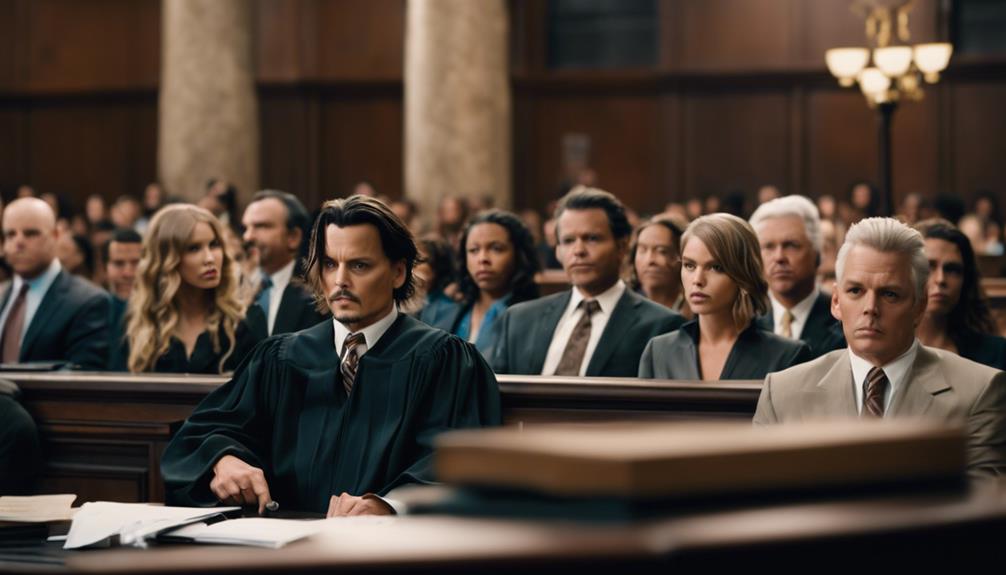
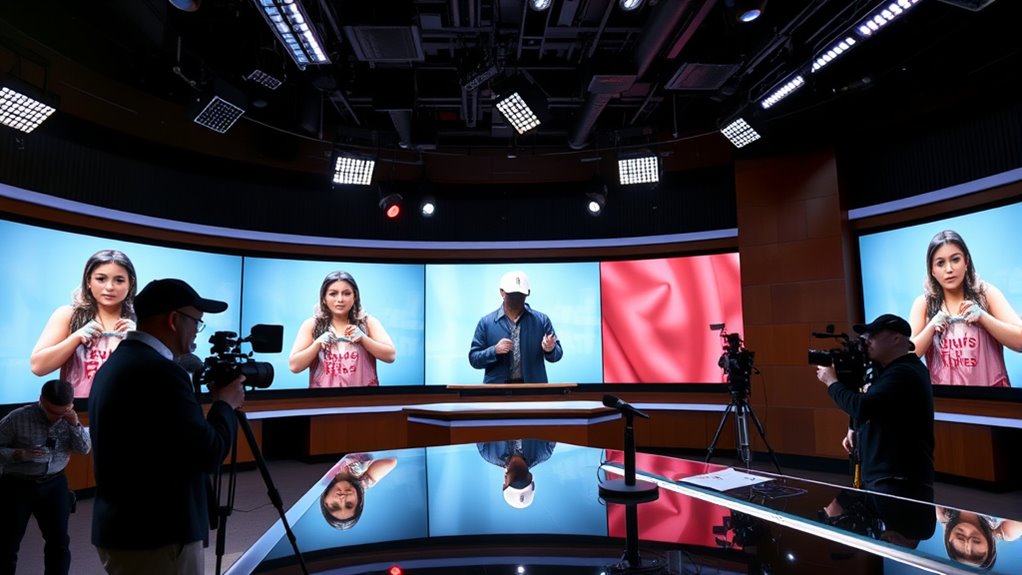

Broadcasting celebrity court cases raises serious ethical concerns. Media sensationalism often blurs the line between informing the public and turning justice into entertainment, which can distort perceptions and influence legal outcomes. You should consider how responsible journalism respects privacy, avoids bias, and maintains fairness. Social media’s rapid spread of misinformation complicates the issue further. If you want to understand how media practices impact justice and ethics, there’s more to explore below.
Key Takeaways
- Ethical journalism must balance public interest with respect for privacy and avoid sensationalism that can distort justice.
- Media coverage should prioritize accuracy and responsible storytelling to prevent misinformation and biased perceptions.
- Broadcasting celebrity cases risks influencing legal outcomes and compromising judicial impartiality through sensational narratives.
- Respecting individuals’ privacy rights is essential to maintain dignity and prevent emotional harm during high-profile trials.
- Media outlets bear ethical responsibility to avoid turning legal proceedings into entertainment while supporting fair, unbiased justice.
The Magnitude of Media Coverage in Celebrity Trials
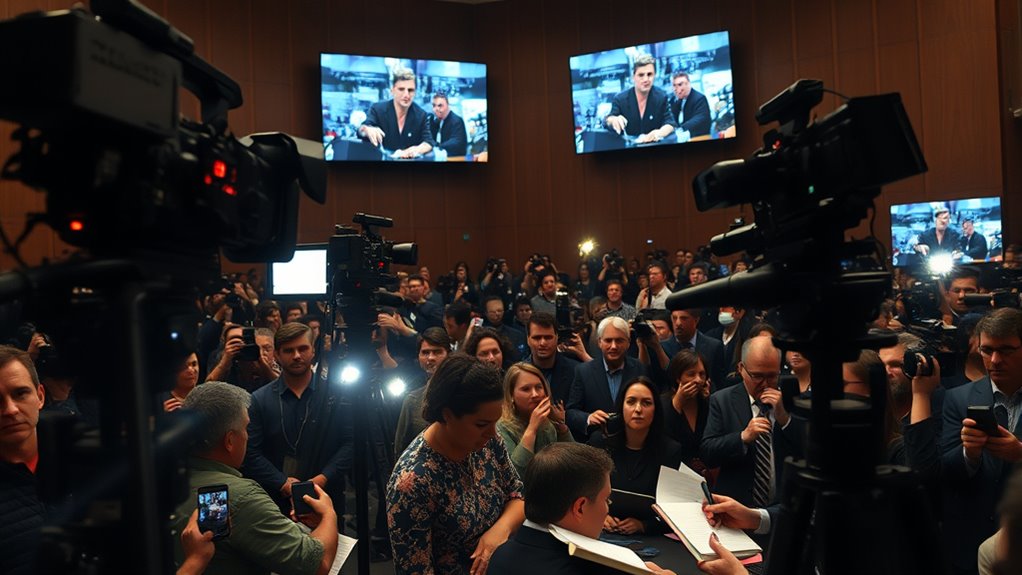
The media coverage of celebrity trials is undeniably overwhelming, often eclipsing the actual legal proceedings. You may notice how cases like O.J. Simpson, Michael Jackson, Johnny Depp, and Amber Heard grab headlines worldwide. Platforms like TikTok, Twitter, and Instagram amplify public engagement, with hashtags such as #justiceforjohnnydepp reaching billions of views. Although celebrity trials are rare compared to typical cases, they attract disproportionate attention due to society’s fascination with fame. This intense focus often distorts the public’s understanding of how justice usually functions, turning serious legal matters into entertainment spectacles. As a result, media outlets prioritize sensationalism, making these trials more about spectacle than justice, which influences perceptions far beyond the courtroom. Additionally, the impact of media sensationalism can undermine the integrity of legal processes and erode public trust in the justice system. The public perception of fairness is often skewed by the constant barrage of sensational headlines, which can distort the true legal issues at stake. Moreover, this phenomenon can contribute to a distorted view of justice, affecting how society perceives accountability and legal outcomes in high-profile cases. The emotional impact on involved parties is also significant, as families and individuals often experience heightened stress and public scrutiny. Furthermore, the pervasive nature of media coverage can shape public opinion in ways that may not accurately reflect the legal realities.
Public Perception and Its Impact on Justice

Public perception often forms quickly based on media coverage, shaping opinions before trials even begin. Misinformation and rumors spread fast, influencing how you view the accused and the justice process. This can lead to bias, making it harder for courts to guarantee fair outcomes. Utilizing expert voice actors and immersive soundscapes in media coverage can further amplify these perceptions and impact public opinion. Additionally, the accuracy of information presented plays a crucial role in maintaining fairness and integrity in the judicial process. Being aware of media influence can help the public critically evaluate the information they receive during high-profile cases.
Bias Formation in Public
How does media coverage shape your perception of a defendant before they even step into the courtroom? It can create bias by highlighting certain traits or behaviors, often without context. This influences how you view their guilt or innocence and affects public opinion. Media narratives tend to villainize or glorify, shaping perceptions that may not align with facts. To illustrate, consider this table:
| Media Portrayal | Public Reaction |
|---|---|
| Emphasizes guilt | Pre-judgment of defendant |
| Highlights innocence | Sympathy or doubt |
| Focuses on controversy | Divided opinions |
Your perception is molded early, often based on sensational headlines and social media posts. This bias can impact jury pools, legal processes, and societal attitudes, undermining fairness.
Misinformation and Rumors
Misinformation and rumors spread rapidly on social media, often shaping perceptions before any legal verdict is reached. You might see false claims, exaggerated stories, or biased opinions that influence public opinion without factual basis. These narratives can distort the truth, making it hard to discern what’s accurate. When you consume such content, you risk forming judgments based on incomplete or misleading information. This misinformation can sway public sentiment, pressuring juries, judges, and legal professionals. Rumors often target celebrities, fueling speculation and hostility that may impact court proceedings. As a result, the line between fact and fiction blurs, undermining trust in the justice process. It’s vital to critically evaluate what you see online and remember that not everything shared reflects reality or legal facts. Understanding the importance of brain activity during dreams can help individuals process trauma and emotional stress caused by these media influences.
Ethical Challenges in Reporting High-Profile Cases
You need to recognize how sensationalism and bias in reporting can distort public perception and influence justice. Media outlets often prioritize entertainment over accuracy, risking unfair treatment of those involved. Balancing the public’s right to know with respecting privacy and fairness remains a critical ethical challenge in high-profile cases. Additionally, understanding the potential impact of public perception on courtroom proceedings is essential for responsible journalism. The use of unique and wicked planters in visual storytelling can also influence how cases are presented to the public, highlighting the importance of ethical considerations in media imagery. Recognizing the influence of media bias on audience opinions is crucial for maintaining journalistic integrity in such coverage. Moreover, the way tuning modifications are portrayed can shape public attitudes towards modifications and individual responsibility.
Furthermore, awareness of ethical hacking principles can inform journalists and media outlets about responsible practices in handling sensitive information and sources, ensuring ethical standards are upheld in investigative reporting.
Sensationalism and Bias
Sensationalism and bias pose significant ethical challenges in reporting high-profile cases, as media outlets often prioritize capturing audience attention over delivering accurate information. You may notice headlines that exaggerate details or sensational language that stokes emotional reactions. This approach can distort the facts, leading the public to form opinions based on drama rather than truth. Bias can also shape coverage, favoring one side or portraying parties unfairly, which influences perceptions before any legal verdict. As a result, you might find yourself more influenced by sensational narratives than by objective reporting. This distortion risks undermining the integrity of justice, as public opinion becomes shaped by media framing rather than facts. An understanding of media influence can help you critically evaluate the information presented and recognize potential biases. Moreover, the rapid dissemination of information through digital platforms amplifies public perception and can intensify the effects of sensationalism. The influence of media coverage extends beyond the courtroom, affecting public trust and perceptions of fairness in legal proceedings. Recognizing the media’s role in shaping opinion is crucial for maintaining an informed and critical perspective. Balancing storytelling with responsibility remains a critical ethical challenge for journalists covering these cases.
Privacy and Fairness
Balancing the public’s right to know with individuals’ privacy rights presents a significant ethical challenge in reporting high-profile cases. You must navigate exposing enough to inform the public without violating personal boundaries. Media outlets often reveal details that can harm reputations or retraumatize victims, raising concerns about fairness. For instance, the resale value of celebrity-related media content can influence what details are disclosed and how they are presented. Additionally, the accuracy of information shared plays a crucial role in maintaining journalistic integrity and public trust. The influence of public perception can sometimes lead to sensationalism, complicating ethical reporting standards.
The Influence of Media on Judicial Impartiality
Media coverage can markedly influence judicial impartiality by shaping public perceptions before a trial even begins. When the media sensationalizes a case, it creates a narrative that may bias judges, jurors, and the public. This can lead to:
- Preconceived notions that challenge the presumption of innocence.
- Elevated pressure on legal professionals to deliver a “just” verdict aligned with public opinion.
- Diminished trust in the fairness of the legal process itself.
- The rise of virtual platforms in the context of remote hackathons demonstrates how digital environments can facilitate wide-reaching, real-time discussions and influence perceptions on a large scale.
As you follow the coverage, remember that these influences can subtly sway decisions, intentionally or not. The media’s portrayal often emphasizes drama over facts, risking a trial-by-public opinion rather than truth. This erosion of impartiality threatens the core principles of justice and fair proceedings.
Privacy Concerns and Respect for Individuals’ Rights

Have you ever considered how much of a person’s privacy gets sacrificed in the rush to cover celebrity trials? When media outlets prioritize sensational stories, they often invade the personal lives of those involved. Public figures, victims, and witnesses face relentless scrutiny, with private moments exposed and personal details shared without consent. This invasion can cause emotional distress, damage reputations, and even threaten safety. The pressure to produce engaging content often outweighs respect for individual rights. As a result, privacy is often sacrificed in the name of ratings and clicks. You should recognize that everyone, regardless of their fame or infamy, deserves a degree of privacy and dignity. Protecting these rights is essential to uphold ethical standards in journalism and justice.
The Role of Social Media in Shaping Narratives
Social media platforms play a pivotal role in shaping public perceptions of celebrity trials by enabling real-time discussion and widespread dissemination of information. You can see how hashtags like #JusticeForJohnnyDepp or #MeToo spread rapidly, influencing opinions before facts are clear. This immediacy often leads to:
- Amplification of rumors, making misinformation more prevalent and harder to control
- Polarization, as users form entrenched views based on partial or biased content
- Pressure on legal processes, potentially swaying jury opinions or judicial decisions
Striking a Balance: Responsible Journalism and Fair Trial Standards
Balancing the need for public interest with the rights of individuals involved in high-profile cases requires careful, responsible journalism. You must report accurately without sensationalizing, recognizing how bias and exaggeration can influence perceptions. Fair trial standards demand that media avoid prejudicing juries or influencing legal proceedings. This means refraining from sharing unverified information, respecting privacy rights, and resisting the urge to turn trials into entertainment. As a journalist, you have a duty to provide context, separate facts from opinions, and prioritize the integrity of the legal process. Striking this balance helps protect the rights of defendants and victims while informing the public responsibly. Ultimately, responsible journalism reinforces trust in the justice system and preserves the dignity of those involved.
Frequently Asked Questions
How Do Celebrity Trials Affect Public Trust in the Justice System?
Celebrity trials can erode your trust in the justice system by highlighting media sensationalism and pre-trial biases. When you see celebrities treated differently or cases driven more by public spectacle than facts, you might question fairness and impartiality. This skewed portrayal makes it harder for you to believe that justice is served equally, fostering skepticism and reinforcing the idea that fame influences legal outcomes rather than genuine justice.
Are There Legal Limits to Media Coverage During Ongoing Celebrity Trials?
You should know that there are legal limits on media coverage during ongoing celebrity trials to ensure fairness. Courts can impose restrictions like gag orders, controlling what can be published or broadcast. Remember, “justice must not only be done but also seen to be done,” so these limits aim to prevent prejudicing the trial. Violating these restrictions can result in contempt of court charges, safeguarding the integrity of the legal process.
What Measures Exist to Protect Individuals’ Privacy in High-Profile Cases?
You can benefit from legal measures like court-ordered gag orders, which restrict media from publishing certain details, and contempt of court charges if reporting violates these orders. Additionally, privacy laws shield defendants, victims, and witnesses from unwarranted intrusion. Courts may also seal case records or impose restrictions on media access to ensure individuals’ privacy. However, enforcement varies, and sensational media coverage often challenges these protections.
How Does Social Media Influence Jury Impartiality in Celebrity Cases?
Remember, “a picture is worth a thousand words.” Social media influences jury impartiality by spreading rumors and opinions rapidly, making it hard for jurors to remain unbiased. You might find yourself swayed by sensational headlines, comments, or viral videos, even unknowingly. This creates a risk of pre-judgment that can jeopardize a fair trial. It’s essential to recognize how online chatter can distort perceptions and undermine the justice process.
Can Media Sensationalism Lead to Wrongful Convictions or Acquittals?
Media sensationalism can definitely lead to wrongful convictions or acquittals. You might be swayed by biased coverage that paints a defendant as guilty or innocent before trial, influencing public opinion and even jurors. This intense focus on sensational details can pressure the legal system, making it harder for judges and juries to stay impartial. Ultimately, you risk undermining justice when media hype distorts the facts and prejudices outcomes.
Conclusion
As you navigate the world of celebrity trials, you realize that behind every headline lies a fragile balance between the truth and public perception. Coincidentally, while media shapes narratives, it also risks overshadowing justice itself. By embracing responsible journalism, you can help preserve fairness, respecting individuals’ privacy even amidst fame’s glare. Ultimately, your choices in reporting reflect not just stories, but the integrity of justice—and perhaps, in doing so, find a deeper understanding of the complex dance between media and morality.