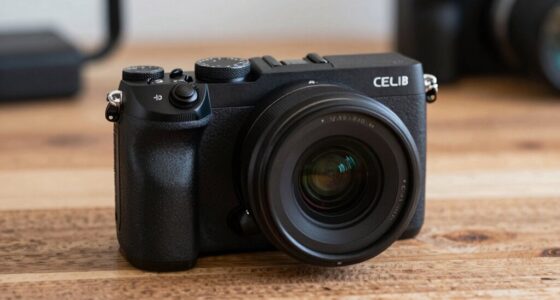

Upgrading to a dedicated portrait lens instantly transforms your photos by providing sharper details and beautiful background blur (bokeh), making your subjects stand out. You’ll notice improved clarity even in tricky lighting, giving your images a professional look. Adjusting your camera settings like wide apertures and low ISO maximizes the lens’s potential. Experimenting with lighting techniques and practice will help you capture stunning portraits quickly. Keep going, and you’ll discover even more tips to improve your shots.

Get movie nights delivered free with Prime
- Fast, free delivery on millions of items
- Prime Video, Amazon Music and more included
- Member-only deals all year
Key Takeaways
- Upgrading to a prime portrait lens (e.g., 50mm f/1.8) instantly improves sharpness and background blur for professional-looking portraits.
- Using wide apertures with a quality lens creates a quick, noticeable enhancement in subject focus and overall image vibrancy.
- Pairing a new lens with proper lighting techniques accelerates the process of capturing stunning, well-lit portraits.
- Optimizing camera settings like low ISO and fast shutter speed ensures sharper images with minimal editing needed.
- Regular practice with the upgraded lens helps develop an intuitive eye for composition and lighting, transforming photo quality rapidly.
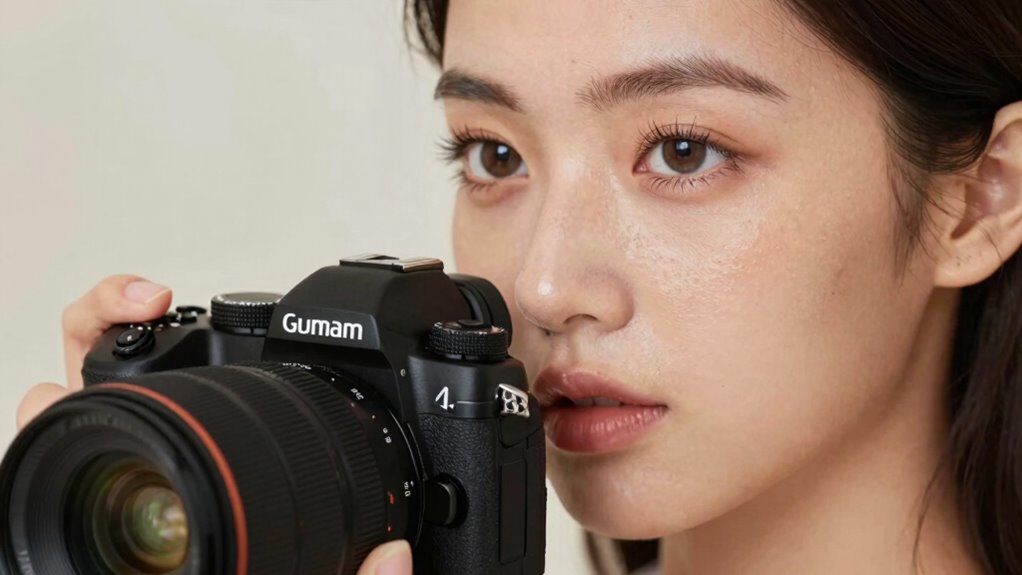
Upgrading your portrait lens can dramatically enhance the quality of your photos, bringing sharper detail and beautiful background blur that make your subjects stand out. This change isn’t just about swapping lenses; it’s about transforming your approach to capturing moments. With a better lens, you’ll notice that even in challenging lighting conditions, your images come out clearer and more vibrant. To maximize this upgrade, you need to understand how lighting techniques and camera settings work together to produce stunning portraits.
First, pay attention to lighting. Good lighting is essential for portrait photography. Natural light, especially during the golden hour, creates soft, flattering illumination. But you can also enhance your shots with reflectors or diffusers to control shadows and highlights. When shooting indoors or in low light, experiment with artificial lighting like softboxes or ring lights. Proper lighting helps your new lens perform at its best, emphasizing details and textures that a lesser lens might miss. Remember, your lens’s aperture plays a role here—wider apertures like f/1.4 or f/1.8 allow more light in, making your subject pop against a blurred background.
Next, adjust your camera settings to capitalize on your upgraded lens. Start with a wide aperture to achieve a shallow depth of field, which creates that beautiful background blur or bokeh. This effect draws focus directly to your subject, making them stand out sharply against a soft background. Use a lower ISO to keep images clean and noise-free, especially when lighting is good. Shutter speed is also pivotal—set it high enough to freeze motion, typically 1/200s or faster for handheld shots. If your camera has a focus mode like eye autofocus, enable it; your new lens will perform better with precise focus, especially if you’re photographing moving subjects or close-up portraits.
Incorporating these techniques allows you to take full advantage of your new portrait lens. Play around with different lighting setups and camera settings to see how they influence your images. The key is to practice often and analyze your results. Over time, you’ll develop an intuitive sense of how to position your lighting and tweak your camera controls to create portraits that captivate. This upgrade isn’t just about better gear—it’s about sharpening your skills, so every shot becomes a compelling story told through your lens.
As an affiliate, we earn on qualifying purchases.
Frequently Asked Questions
What Budget Should I Allocate for a Portrait Lens Upgrade?
You should allocate around $300 to $1,000 for a quality portrait lens upgrade. Investing within this range helps you access better optics, which enhances your lighting techniques and creates sharper, more vibrant portraits. With this upgrade, you’ll find post-processing tips easier, as the lens quality reduces noise and improves detail. Prioritize your budget based on your skill level and photographic goals to get the best value for your investment.
How Does a Portrait Lens Improve Photo Quality Instantly?
Ironically, a portrait lens instantly improves photo quality by transforming your shots from average to stunning. You’ll notice better background blur and sharper details effortlessly. It enhances lighting techniques, making your subject stand out, and guides model positioning with more forgiving focus. This lens’s unique properties help you capture professional-looking portraits quickly, even if you’re still mastering your craft. It’s the secret to elevating your photography instantly.
Are Prime Lenses Better Than Zoom for Portraits?
Prime lenses are generally better for portraits because they offer wider apertures, allowing you to use softer lighting techniques and create beautiful background blur. They encourage you to focus on composition tips like framing and depth. With primes, you can quickly adapt your lighting and positioning, making your portraits more striking. Plus, their sharpness enhances skin tones and details, resulting in professional-looking photos every time.
What Camera Settings Work Best With a New Portrait Lens?
Ever wondered what settings make your new portrait lens shine? Start with a wide aperture like f/1.8 to create beautiful background blur, then adjust ISO for proper exposure and keep it as low as possible to reduce noise. Use soft, directional lighting techniques to enhance your subject’s features, and select simple backgrounds that complement your subject without distraction. Are you ready to capture stunning portraits effortlessly with the right camera settings?
How to Choose the Right Focal Length for Portraits?
You should choose a focal length between 85mm and 135mm for portraits, as it flatters facial features while minimizing distortion. Use lighting techniques like soft diffused light to highlight your subject’s best features. Also, select backgrounds that are simple and unobtrusive, ensuring they don’t distract from your subject. Adjust your focal length based on the environment and the mood you want to create, blending lighting and background choices for stunning portraits.
ring light for portrait photography
As an affiliate, we earn on qualifying purchases.
As an affiliate, we earn on qualifying purchases.
Conclusion
Imagine the moment you switch to that new portrait lens—every shot feels instantly sharper, more vibrant. Your photos transform before your eyes, capturing moments with stunning clarity. But here’s the twist: this upgrade isn’t just about better images; it’s about revealing a new level of confidence behind the camera. Are you ready to see what’s possible? The next shot might just change everything—if you dare to take the leap.
As an affiliate, we earn on qualifying purchases.
As an affiliate, we earn on qualifying purchases.
Halloween Picks
halloween
As an affiliate, we earn on qualifying purchases.