
TL;DR

Get movie nights delivered free with Prime
- Fast, free delivery on millions of items
- Prime Video, Amazon Music and more included
- Member-only deals all year
In an October 8 interview with Kathimerini, U.S. Secretary of State Marco Rubio described the war as a strategic stalemate and said negotiations had so far proved elusive. Ukrainian President Volodymyr Zelensky disputed that framing, arguing that Washington could increase pressure on Russia and provide Ukraine with greater defensive support to change the conditions for talks.
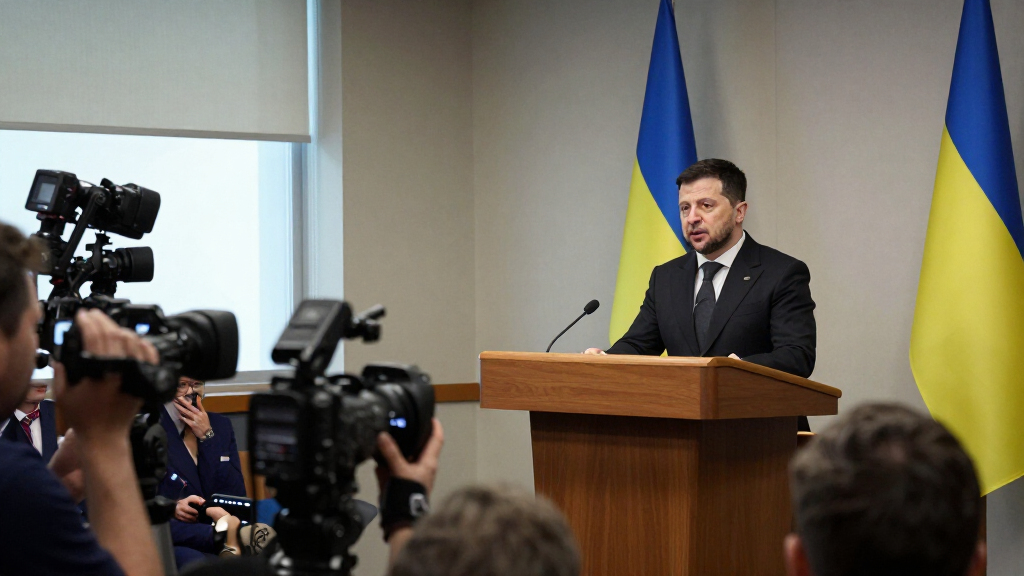
Ukrainian President Volodymyr Zelensky has rejected U.S. Secretary of State Marco Rubio’s description of the war as a strategic stalemate, arguing that Washington can help change the conditions for peace by tightening pressure on Russia and strengthening Ukraine’s defenses. In an October 8 interview with Greek newspaper Kathimerini, Rubio said a negotiated settlement remained elusive; Zelensky responded that describing diplomacy as blocked overlooks choices the United States could still make.
Rubio said the invasion appeared to be entering its fifth year, which he said had not been Russia’s original plan. He characterized the situation as a “strategic stalemate” and said such deadlocks can end through a negotiated settlement or through escalation that spreads beyond the original conflict. He voiced concern about the risk of a broader war.
Rubio said Russia had repeatedly defined its objective as taking all of Donetsk, a condition Ukraine considers unacceptable. He said the United States remained prepared to help facilitate negotiations but that a diplomatic solution had so far eluded efforts. He also cited risks including attacks on ships in the Black Sea, a possible sabotage operation in a neighboring country, and Russian efforts to damage Ukraine’s electricity grid over the winter. These were concerns he expressed in the interview, not outcomes established by the report.
Zelensky argued that the impasse was not unavoidable. He called on the United States to cut off Russia’s economic resources, impose sanctions on weapons, and make Starlink available to Ukraine. He also said the United States had the capacity to help Ukraine defend and control its airspace. Zelensky claimed that stronger assistance could force Russian President Vladimir Putin to negotiate, but the interview provided no independent assessment of that prediction.
Pressure Could Change Talks
The exchange highlights a difference in how Washington and Kyiv describe the path to negotiations. Rubio presented the conflict as a dangerous stalemate with no clear diplomatic opening, while Zelensky said the apparent dead end reflects a lack of political willingness to increase pressure on Russia. The distinction matters because it frames the debate over whether the next step should be renewed diplomatic efforts, stronger support for Ukraine, or both.
Zelensky’s requests also touch on consequential policy choices: sanctions, technology access, and military assistance for air defense. His claim that such steps would bring Putin to the negotiating table is his assessment, not a confirmed outcome. Rubio’s remarks, meanwhile, signal concern that continued fighting could expand, but do not set out a new U.S. policy or a specific negotiating plan.
Starlink satellite internet for Ukraine
As an affiliate, we earn on qualifying purchases.
As an affiliate, we earn on qualifying purchases.
Rubio’s Stalemate Assessment
In the Kathimerini interview, Rubio described the war as moving toward its fifth year and said a negotiated solution had not emerged. He said Russia’s stated demand for the entirety of Donetsk was unacceptable to Ukraine, leaving a substantial gap between the sides. He also said Washington was willing to play a constructive role if an opportunity for settlement arose.
Zelensky’s answer addressed the idea that diplomacy had reached a dead end. He pointed to the possibility of more sanctions and military support, including help to defend Ukrainian airspace. His comments about China developing an alternative to Starlink and potentially providing it to Russia were Zelensky’s warning; the supplied report does not independently verify the timetable or likely use of such a system.
““What it is now, unfortunately, is a strategic stalemate, which is a dangerous thing.””
— U.S. Secretary of State Marco Rubio, in an October 8 interview with Kathimerini
As an affiliate, we earn on qualifying purchases.
Policy Steps Remain Unspecified
The statements do not establish whether Washington will adopt any of Zelensky’s requested measures, including additional sanctions, expanded satellite connectivity, or further help with air defense. Rubio described a willingness to facilitate a settlement but did not announce a new initiative, timetable, or specific terms for negotiations.
It is also unclear whether the two governments will pursue a new diplomatic effort or how Russia would respond to the measures Zelensky proposed. His claim that stronger support could bring Putin to talks remains a prediction. The report also does not independently verify Rubio’s warnings about prospective winter attacks, possible sabotage, or the development and transfer of a Chinese satellite-communications alternative.
portable power generators for emergencies
As an affiliate, we earn on qualifying purchases.
As an affiliate, we earn on qualifying purchases.
Watch for U.S. Policy Signals
The next indicator will be whether U.S. officials announce concrete changes to sanctions, military support, or access to communications technology, and whether Washington takes steps to pursue negotiations. Rubio said the United States was prepared to explore opportunities for a settlement, but gave no schedule or details in the interview. The supplied report does not identify a planned meeting or a specific diplomatic milestone.
Further statements from Kyiv, Washington, and Moscow may clarify whether the disagreement is primarily over the language used to describe the conflict or over what practical steps could create leverage for talks. Until officials outline those steps, it remains uncertain whether the exchange will lead to a policy change or renewed negotiations.
military-grade communication radios
As an affiliate, we earn on qualifying purchases.
As an affiliate, we earn on qualifying purchases.
Key Questions
What did Zelensky say to Washington?
He argued that the war is not at an unavoidable diplomatic dead end and urged the United States to increase pressure on Russia and strengthen Ukraine’s defensive capabilities.
What did Marco Rubio say about the war?
Rubio called the situation a strategic stalemate, said negotiations had so far proved elusive, and said the United States was prepared to help facilitate a settlement.
Did the United States announce new measures?
No new policy measures were announced in the statements provided. Zelensky made requests concerning sanctions, Starlink access, and air defense, while Rubio expressed readiness to support diplomacy.
Is it confirmed that stronger U.S. support would bring Putin to negotiations?
No. That was Zelensky’s prediction. The report does not provide independent evidence that the proposed measures would produce negotiations or a settlement.
Source: rss
Halloween Picks
halloween
As an affiliate, we earn on qualifying purchases.