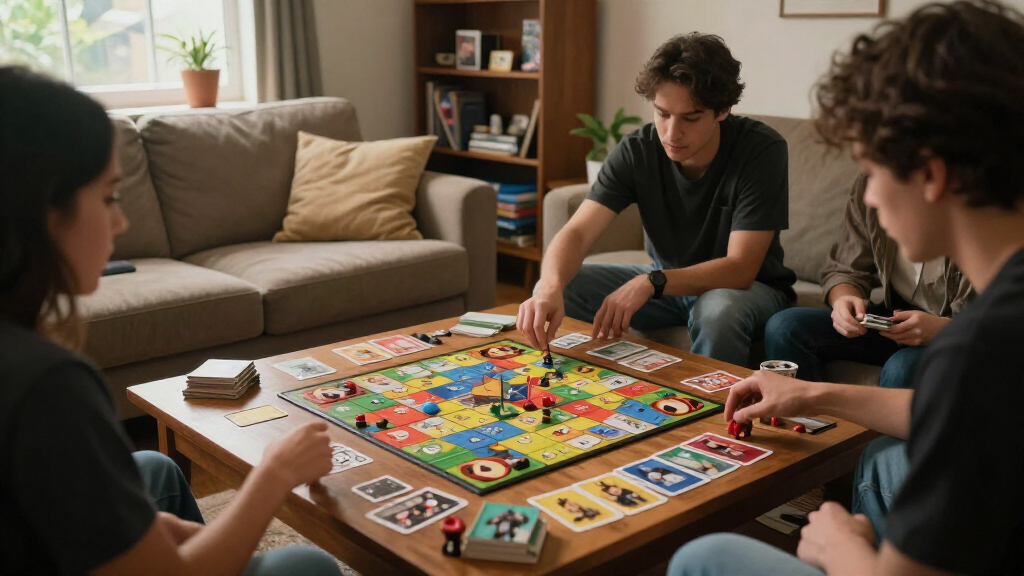

The best pop culture themed board games split into two camps: knowledge-based trivia games that reward decades of absorbed movies, music, and TV, and quick-fire party games that work even when nobody knows the answer. The Timeline Twist Pop Culture Edition takes my top spot because its cooperative format means mixed-age groups can play together without anyone feeling steamrolled, while the 5 Second Rule Pop Culture Edition stands out as the fastest route to laughs at a party. The main tradeoff you’ll face is between nostalgia depth and accessibility — games like the Aquarius 80s and 90s music trivia decks reward older players heavily but can leave teens and casual fans behind. Read on for the full breakdown, including who each game suits and who should skip it.

Get movie nights delivered free with Prime
- Fast, free delivery on millions of items
- Prime Video, Amazon Music and more included
- Member-only deals all year
Key Takeaways
- Cooperative formats like Timeline Twist solved the biggest problem in this category: one trivia-obsessed player dominating every round while everyone else watches.
- Decade-specific music games (Aquarius 80s, Aquarius 90s, Gen-X Challenge) offer the deepest nostalgia but effectively exclude anyone born after the era — buy them only if your group shares that memory bank.
- The 5 Second Rule Mini Tube was the only pick that fit in a jacket pocket, making it the clear choice for travel and sleepovers over any full-size trivia box.
- Humor-driven games like the funny Pop Culture Card Game for Teens traded factual depth for inclusivity — younger players could win without any trivia knowledge at all.
- Outset Media’s Pop Culture Trivia Game covered the widest era span, making it the safest default when you don’t know your group’s age range in advance.
| AQUARIUS 90s Music Trivia Card Game |  | Best for 90s Nostalgia Nights | Number of Cards: 52 | Total Questions: 102 | Genres Covered: 90s Pop, Rock, Hip-Hop, Alternative | VIEW LATEST PRICE | See Our Full Breakdown |
| 5 Second Rule Game Pop Culture Edition (Mini Tube) |  | Best Travel Pick | Number of Questions: 180 | Includes: Timer, Pass cards, Switch cards, Rules | Recommended Age: 8+ | VIEW LATEST PRICE | See Our Full Breakdown |
| AQUARIUS Music Trivia Card Game – 80s Edition |  | Best for Gen X Parties | Number of Cards: 52 | Total Questions: 102 | Genre Focus: 80s Pop, Rock, Hip-Hop, Alternative | VIEW LATEST PRICE | See Our Full Breakdown |
| Timeline Twist Pop Culture Edition |  | Best Family Game | Number of Players: 2-6 (also plays solo) | Ages: 8+ | Playtime: About 20 minutes | VIEW LATEST PRICE | See Our Full Breakdown |
| Outset Media Pop Culture Trivia Game |  | Best Overall Value | Number of Questions: 1200 | Age Range: 12+ | Players: 2 or more | VIEW LATEST PRICE | See Our Full Breakdown |
| The Gen-X Challenge – 80s and 90s Trivia Card Game with 600 Trivia Cards |  | Best for Gen-X Nostalgia Nights | Number of Trivia Cards: 600 | Theme: 80s and 90s pop culture | Topics Covered: Movies, music, TV shows | VIEW LATEST PRICE | See Our Full Breakdown |
| Pop Culture Card Game for Teens, Kids and Adults – Funny Party Board Game |  | Best Mixed-Age Party Pick | Number of Cards: 100 (500+ questions) | Themes: Movies, music, celebrities, viral trends | Suitable For: Teens, tweens, adults | VIEW LATEST PRICE | See Our Full Breakdown |
More Details on Our Top Picks
AQUARIUS 90s Music Trivia Card Game
This deck carves out a specific niche: 90s music trivia across grunge, hip-hop, R&B, and pop. Where the Outset Media Pop Culture Trivia Game spreads 1,200 questions across decades, this one goes deep on a single era, which makes it more satisfying for players who actually lived through it. The fun facts printed on each card give it an edge as a conversation starter rather than just a quiz. Compared with the AQUARIUS 80s edition, it skews slightly better for mixed crowds since 90s hip-hop and pop remain radio staples today. The tradeoff is range — a group with anyone under 25 will struggle with deeper cuts, and difficulty swings unevenly between cards.
Pros:- Deep, era-specific question pool spanning four major 90s genres
- Fun facts on every card turn trivia into conversation
- Works for both teens and adults at parties
- Quick rounds that don’t require a long time commitment
Cons:- Narrow appeal outside of 90s music fans
- Question difficulty is inconsistent, swinging from easy to obscure
- Needs multiple players to be any fun
Best for: Gen X and older millennial hosts who want a themed party game built around the music they grew up with
Not ideal for: Mixed-age groups with teens or Gen Z players who won’t recognize B-sides and one-hit wonders from the 90s
- Number of Cards:52
- Total Questions:102
- Genres Covered:90s Pop, Rock, Hip-Hop, Alternative
- Material:Cardstock
- Recommended Age:8 years and up
- Brand:AQUARIUS
- Model Year:2025
Our verdict“Buy this if your game night crowd came of age in the 90s; skip it if your group spans generations.”
5 Second Rule Game Pop Culture Edition (Mini Tube)
The mini tube format is what sets this apart — it’s the only option in this lineup that genuinely disappears into a backpack or carry-on. Compared with the Outset Media Pop Culture Trivia Game, which offers far more questions, this trades volume for energy: the ticking timer and pass/switch cards create panic-driven laughter instead of quiet pondering. Its questions lean current — TikTok songs, movie villains — making it the freshest pick here for younger players, while the 80s and 90s AQUARIUS decks feel intentionally backward-looking. The tradeoffs are real, though: the five-second pressure flusters younger kids, and 180 questions burn out faster than bigger decks.
Pros:- Genuinely portable mini tube design
- Current pop culture topics that connect with teens
- Supports 2 to 8 players across a wide age range
- Timer adds energy and urgency to gameplay
Cons:- Only 180 questions, so content repeats quickly
- Fast pace can frustrate younger or slower-thinking players
Best for: Families and teen groups who need a pocket-sized game for road trips, sleepovers, and vacation downtime
Not ideal for: Households with kids under 10 or groups that prefer slower, strategic trivia over rapid-fire pressure
- Number of Questions:180
- Includes:Timer, Pass cards, Switch cards, Rules
- Recommended Age:8+
- Player Count:2 to 8
- Format:Mini tube card game
- Theme:Current pop culture
Our verdict“This is the pick if portability and teen-friendly current references matter more than question depth.”
AQUARIUS Music Trivia Card Game – 80s Edition
The 80s sibling of the AQUARIUS 90s deck follows the same formula — 52 cards, 102 questions, a fun fact per card — but the audience shifts older. This one makes the most sense for a crowd whose formative years were synth-pop, hair metal, and early hip-hop; the 90s edition will feel more accessible to millennials by comparison. Compared with The Gen-X Challenge, which splits its 600 cards across both decades, this deck’s single-decade focus means tighter, more consistent questions for purists. The drawback is built into the concept: anyone without genuine 80s familiarity will be guessing, and the smaller question count limits replay for a dedicated group.
Pros:- Focused 80s question pool across pop, rock, hip-hop, and alternative
- Fun facts add depth beyond simple right-or-wrong answers
- Quick, easy rounds suit casual party pacing
- Simple rules with no board or setup required
Cons:- Strictly limited to players who know 80s culture
- 102 questions can feel repetitive after a few sessions
Best for: Gen X hosts and 80s nostalgics who want a focused, low-setup party game for like-minded friends
Not ideal for: Mixed groups with younger players who have no connection to 80s artists, trends, or one-hit wonders
- Number of Cards:52
- Total Questions:102
- Genre Focus:80s Pop, Rock, Hip-Hop, Alternative
- Includes:Questions, answers, fun facts
- Format:Trivia card game
- Brand:AQUARIUS
Our verdict“The strongest choice when your entire group genuinely knows the decade — and a weak one when anyone doesn’t.”
Timeline Twist Pop Culture Edition
This is the only cooperative title in the lineup, and that changes everything about who it serves. Instead of quizzing individual knowledge like the AQUARIUS decks, players work together to sequence 100 pop culture and historical events — so the 8-year-old and the grandparent contribute equally without anyone being embarrassed. Compared with the 5 Second Rule Pop Culture Edition, it removes time pressure entirely, making it far friendlier for younger kids. The 20-minute playtime hits a sweet spot for family game nights, and it doubles as an expansion for the base Timeline Twist. The tradeoffs: date estimation is genuinely hard for younger children, and competitive trivia fans will miss the head-to-head tension.
Pros:- Cooperative format eliminates player elimination and hurt feelings
- Plays solo or with up to 6 players
- Short 20-minute sessions fit busy family schedules
- Works standalone or as an expansion to Timeline Twist
Cons:- Younger kids struggle to estimate dates accurately
- Too brief for groups wanting a long game night centerpiece
Best for: Families with mixed ages who want a no-tears, team-based game where everyone contributes
Not ideal for: Competitive groups and hardcore trivia buffs who want individual scoring and head-to-head showdowns
- Number of Players:2-6 (also plays solo)
- Ages:8+
- Playtime:About 20 minutes
- Content:100 new dates
- Game Type:Cooperative trivia
- Compatibility:Standalone or Timeline Twist expansion
Our verdict“The best pick here for genuinely mixed-age families, as long as nobody needs a winner and a loser.”
Outset Media Pop Culture Trivia Game
With 1,200 questions spanning multiple decades, this deck solves the single biggest weakness of the era-specific AQUARIUS titles: replay longevity and audience reach. Where the 80s and 90s decks lock out anyone outside their generation, this one lets a 45-year-old and a teenager compete on roughly equal footing because no single decade dominates. It lacks the timer-driven energy of 5 Second Rule and the cooperative warmth of Timeline Twist, but for pure question volume per dollar in this roundup, nothing else comes close. The 12+ age floor is worth noting — it’s the highest minimum age here — and the analog, no-frills presentation means no bells and whistles for players who want them.
Pros:- 1,200 questions give exceptional replay value
- Multi-decade coverage keeps mixed-age groups competitive
- Quick to learn with essentially no setup
- Portable design works for travel and gatherings
Cons:- Age 12+ minimum excludes younger kids that other picks accommodate
- No interactive components like timers or twist mechanics
- Question difficulty can feel uneven across eras
Best for: Buyers who want one versatile trivia game that covers every generation and won’t run dry after a few game nights
Not ideal for: Families with kids under 12, or groups wanting fast-paced, timer-based party energy
- Number of Questions:1200
- Age Range:12+
- Players:2 or more
- Included Components:Trivia cards, instruction sheet
- Topic Coverage:Celebrities, products, trends across decades
- Model Year:2019
- Brand:Outset Media
Our verdict“The safest all-around purchase in this roundup for groups that value variety and longevity over a specific theme.”
The Gen-X Challenge – 80s and 90s Trivia Card Game with 600 Trivia Cards
Where the AQUARIUS 90s Music Trivia Card Game narrows its lens to music alone, this option goes wide, covering movies, music, and TV across two full decades. That breadth is its biggest selling point: a mixed group of lapsed MTV fans and movie buffs can all find questions pitched at their strengths. With 600 cards, it nearly triples the content of the Pop Culture Card Game for Teens, Kids and Adults, which means game nights stay fresher longer before questions repeat. The keepsake box also feels more giftable than the standard tuck-boxes most trivia decks ship in. The tradeoff is generational narrowness — anyone under 40 will likely sit out questions about 80s sitcoms, and there is no stated difficulty tiering, so lopsided matchups are common. This pick makes the most sense for a crowd that grew up on these decades rather than a mixed-age family table.
Pros:- 600 cards provide far more replay value than most trivia decks in this price category
- Covers movies, music and TV rather than a single pop culture lane
- Durable keepsake box doubles as attractive gift packaging
- Great conversation starter for reminiscing groups
Cons:- Strictly limited to 80s and 90s themes, excluding younger players entirely
- No published age recommendation or difficulty levels, making matchups uneven
- Questions can feel repetitive for groups who play frequently
Best for: Adults 40+ hosting game nights with same-generation friends who want deep, decade-specific nostalgia
Not ideal for: Mixed-age families or groups with younger players — the 80s and 90s focus leaves tweens and teens with little to answer
- Number of Trivia Cards:600
- Theme:80s and 90s pop culture
- Topics Covered:Movies, music, TV shows
- Suitable For:Adults, game nights, parties
- Packaging:Durable keepsake box
- Game Type:Trivia card game
Our verdict“Buy this if your game night crowd actually lived through the decades in question; skip it if anyone under 35 will be at the table.”
Pop Culture Card Game for Teens, Kids and Adults – Funny Party Board Game
This deck solves the exact problem the Gen-X Challenge creates: it works for tweens, teens, and adults at the same table. Instead of decade-specific trivia, questions span movies, music, celebrities, and viral trends, so a 12-year-old who knows TikTok can genuinely beat a parent who knows cinema. Compared with the 5 Second Rule Game Pop Culture Edition, the appeal here is open-ended debate rather than a frantic timer — questions invite opinions and arguments, which suits road trips and casual hangouts more than competitive game nights. Setup is essentially instant with no board required, making it the most portable option in this lineup. The catch is currency: because it leans on viral trends, questions age quickly, and players who don’t follow pop culture closely may feel left out. There is also little structured variation, so groups wanting formal rules should temper expectations.
Pros:- Genuinely spans tweens through adults, so the whole family can compete fairly
- Portable, board-free design sets up in seconds anywhere
- Question style sparks debates and conversation rather than pure recall
- Scales comfortably across different group sizes
Cons:- Relies heavily on familiarity with current trends, so some players and questions age out quickly
- No included instructions for variations or advanced gameplay
- 100 cards offer less long-term replay depth than larger decks like the Gen-X Challenge
Best for: Families and mixed-age groups who want a low-prep, opinion-driven party game for road trips and gatherings
Not ideal for: Strategy or rules-focused gamers — it’s loose, debate-driven, and lacks advanced gameplay variations
- Number of Cards:100 (500+ questions)
- Themes:Movies, music, celebrities, viral trends
- Suitable For:Teens, tweens, adults
- Gameplay:Quick setup, no board required
- Format:Portable card game
- Play Style:Debate and opinion-driven party game
Our verdict“The easiest pick in this roundup for a family with kids and adults at the same table, as long as everyone keeps up with pop culture.”
How We Picked
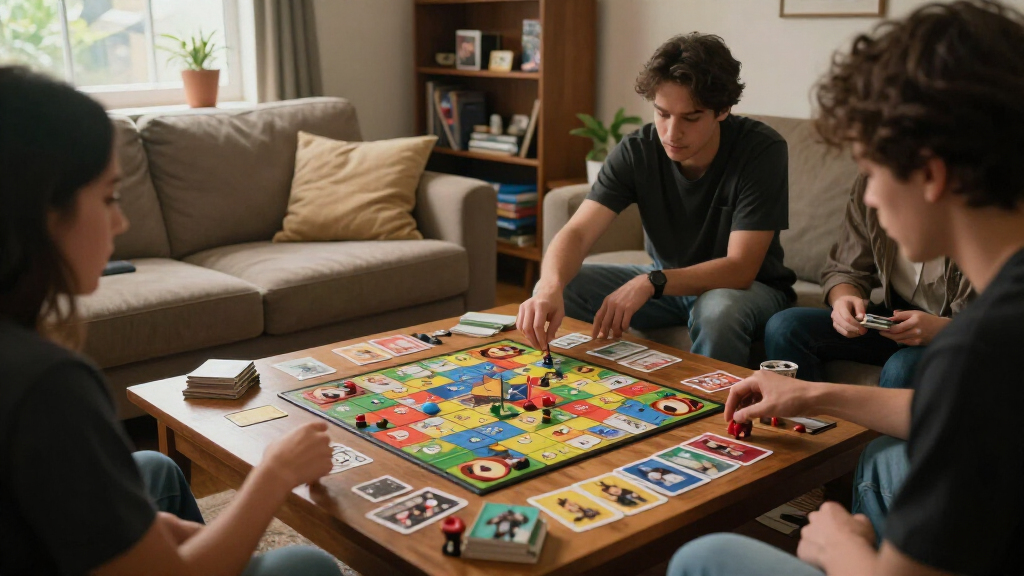
Since pop culture knowledge varies wildly by age, I judged every game first on group compatibility — whether it could entertain a mixed crowd or only players who grew up in a specific decade. Next came replay value: trivia games live or die by question volume and variety, so decks with small card counts or heavy repetition ranked lower. Format and accessibility mattered too, because a game that takes ten minutes to explain rarely hits the table, while cooperative and humor-based designs keep weaker players engaged.
I also weighed portability and party fit, since many of these are bought for travel, sleepovers, or last-minute gatherings rather than dedicated game nights. Finally, I considered build quality and component longevity for the price tier. The ranking rewards versatility at the top — games that work across ages and settings — while narrower nostalgia picks sit lower not because they’re worse, but because they demand the right audience to shine.
Factors to Consider When Choosing Pop Culture Themed Board Games
Choosing a pop culture game is less about quality and more about matching the game to your group. Before buying, think through these factors to avoid the most common mistake in this category: picking a game your guests can’t actually compete in.Know Your Group’s Knowledge Era
The single biggest buying mistake in this category is mismatching the decade. A game packed with 80s hair-metal and sitcom questions will fall flat with a group of college students, no matter how well-made it is. Before purchasing, ask yourself who will actually be at the table in six months, not just who’s coming this weekend. Broad-era games are the safer default when your crowd rotates, while decade-specific decks are only worth it when your group genuinely shares that era’s references. A common trap is buying a nostalgia game for a parent thinking it will ‘bring the family together’ — it often does the opposite by making kids feel like spectators.
Competitive vs. Cooperative Formats
Most pop culture games are competitive trivia, which works fine when players are roughly evenly matched. But when skill gaps are wide — parents versus teens, casual fans versus obsessives — competitive games produce one-sided nights and bruised egos. Cooperative designs flip this by making the whole table work against the game itself, so the strongest player becomes an asset rather than a threat. If your gatherings regularly include mixed knowledge levels, lean cooperative. If your group is all trivia hounds who love keeping score, competitive scoring actually adds to the fun rather than subtracting from it.
Question Volume and Replay Lifespan
A trivia game is only as good as its remaining unknown questions. Small decks can exhaust themselves in a handful of sessions, and once a group has memorized the cards, the game is effectively dead weight. Check the card count and think about how often you’ll play: a deck that supports ten great nights beats a cheaper one that supports three. Also consider whether the questions have dated — pop culture references age faster than any other trivia category, and a game built on reality TV from several years ago can feel stale at today’s table. Expansion potential or a large base set extends the value considerably.
Portability and Play Setting
Where you play should shape what you buy. Compact card-only games slip into a bag for vacations, restaurants, and sleepovers, while boxier sets belong on a shelf at home. Party settings also reward games with fast rounds and minimal explanation — a game that takes twenty minutes to teach will lose the room before the first laugh. If your main use case is breaking the ice at gatherings, prioritize speed and simplicity over question depth. If you host regular dedicated game nights, a richer ruleset and longer play arc become worth the extra setup.
Humor vs. Knowledge: What Kind of Fun Do You Want?
Not every pop culture game is really about pop culture knowledge. Some use shared references mainly as a comedy engine, where the funny wrong answers matter more than the right ones. These games level the playing field dramatically — someone who’s never seen the referenced movie can still win on wit alone. Knowledge-based games, by contrast, reward exactly the people who already know the most, which can feel great or terrible depending on where you sit. Decide whether your group wants to prove what they know or just laugh together, because the wrong choice produces a flat evening even with a well-designed game.
Age Range and Family Suitability
Adults and teens often overlap in this category, but not always cleanly. Some trivia content leans on R-rated movies, explicit-lyrics-era music, or adult humor that isn’t appropriate for younger kids, even when the box says ‘teen friendly.’ Conversely, kid-focused pop culture games can bore adults quickly if every question is about cartoons and YouTube stars. The sweet spot for family groups is a game with layered difficulty or references spanning multiple generations. Check the stated age range against your actual youngest player rather than taking the packaging at face value.
Frequently Asked Questions
Which pop culture game works best when players span different generations?
Cooperative games like Timeline Twist handle generational gaps best because the table plays together rather than against each other, so a grandparent’s classic-movie knowledge and a teen’s streaming-show recall both contribute to the same goal. Broad-era trivia games are the next best option, since they spread questions across decades and give everyone moments to shine. Avoid decade-specific decks like the Aquarius 80s or Gen-X Challenge for mixed groups — they systematically shut out younger players. If the gap is extreme, a humor-based game where knowledge barely matters may be the only format where everyone stays genuinely engaged.
Are the decade-specific music trivia decks worth buying if only one player knows the era?
Generally no, and this is where most disappointment in this category comes from. Trivia games built around one decade create lopsided scoreboards when only one player lived through it, turning game night into a solo showcase. These decks make sense when your whole group shares the era — old college friends, siblings, or a same-generation couples’ night. If you’re buying for one nostalgic person, consider a broad-era game instead and let their knowledge be an advantage rather than the whole game. The 90s and 80s Aquarius decks are best treated as a matched purchase for an era-homogeneous crowd, where they genuinely deliver.
How long do these games take to learn and play?
The party-format games are the fastest to the table: 5 Second Rule and similar humor-driven card games typically explain in under two minutes and finish rounds in seconds, which is why they excel at chaotic gatherings. Timeline-style and cooperative trivia games sit in the middle, needing five to ten minutes of rules explanation but playing smoothly afterward. Traditional trivia formats run longest, often an hour or more for a full game, which suits a planned game night but not a spontaneous hangout. Match the time commitment to the setting — a long trivia set at a party will stall, and a two-minute card game as the centerpiece of a game night will feel thin.
Can teens and adults genuinely enjoy the same pop culture game, or should I buy separate games?
They can, but only with the right format. Games that blend older and newer references — like the Outset Media trivia set with its wide era span — let each generation answer within their comfort zone. Cooperative designs go further by making mixed knowledge a strength instead of a handicap. What doesn’t work is a game whose questions all target one demographic while the other merely watches. If your family game nights are a regular thing, owning one broad game and one decade-specific deck gives you the right tool depending on who shows up, which is cheaper and more flexible than forcing a single game to fit every table.
What’s the difference between a party game and a trivia game in this category?
A trivia game measures what you know — points come from correct answers, and the winner is usually the person with the deepest pop culture memory. A party game uses pop culture as fuel for laughs: the fun comes from fast answers, absurd responses, or social chaos, and winning is almost secondary. Party formats like 5 Second Rule forgive ignorance because a panicked wrong answer is often funnier than a correct one. Trivia formats reward it. If your goal is competitive game night, go trivia; if your goal is breaking the ice with people you barely know, go party — nervous laughter builds a group faster than a scoreboard ever will.
Conclusion
The right pick depends entirely on who’s sitting at your table. For best overall, the Timeline Twist Pop Culture Edition earns the top spot because its cooperative structure handles mixed ages and skill levels better than anything else in this lineup. For best value, the Outset Media Pop Culture Trivia Game covers the widest era span for a modest outlay, making it the safest default pick when you don’t know your crowd. For best for beginners and parties, the 5 Second Rule Mini Tube explains in under two minutes and travels anywhere, which is exactly what a sleepover or travel game needs to do.
For specific needs, the nostalgia crowd should split by decade: the Aquarius 80s deck and AquARIUS 90s deck for era-homogeneous groups, or the Gen-X Challenge when you want maximum card volume spanning both decades. Families with teens should look at the funny Pop Culture Card Game, where humor levels the field and nobody needs trivia knowledge to win. Match the format to your group first, the decade second, and you’ll land on the right game.
Halloween Picks
halloween
As an affiliate, we earn on qualifying purchases.