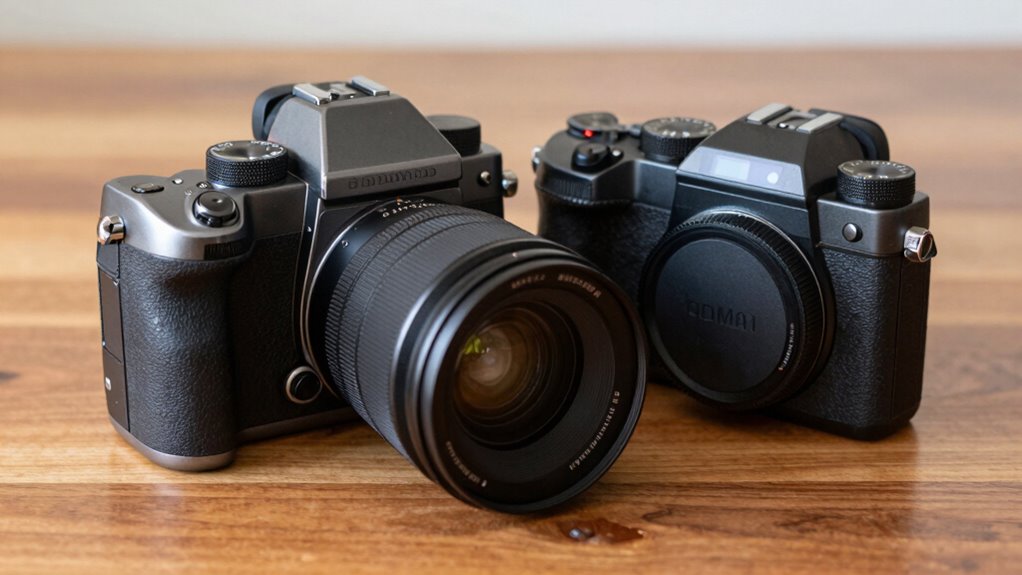

Choosing a medium format camera in 2026 involves balancing resolution, size, and professional features. The Hasselblad X2D II 100C stands out for its stunning 100MP sensor and color accuracy, ideal for studio work. The Fujifilm GFX 100S offers a remarkable blend of high resolution and portability, making it perfect for on-location shoots. Meanwhile, the Fujifilm GFX100 II pushes further with advanced video and connectivity, catering to professionals who need versatility. These picks reflect different priorities—whether resolution, ease of use, or multimedia capabilities—and come with important tradeoffs like cost and weight.

Get movie nights delivered free with Prime
- Fast, free delivery on millions of items
- Prime Video, Amazon Music and more included
- Member-only deals all year
Key Takeaways
- High-resolution sensors (100+ MP) are standard but demand powerful storage and processing.
- Professional-grade features like advanced autofocus and stabilization significantly enhance image quality.
- Size and weight vary considerably, influencing portability and handling.
- Video capabilities differ greatly—some cameras now support 8K RAW, catering to hybrid shooters.
- Price ranges reflect feature depth, with premium models suited for professionals and more budget-friendly options for enthusiasts.
| Hasselblad X2D II 100C Medium Format Mirrorless Camera |  | Best Overall for Professional High-Resolution Imaging | Compatible Mountings: Hasselblad XCD | Aspect Ratio: 4:3 | Sensor Type: CMOS | VIEW ON AMAZON | See Our Full Breakdown |
| Fujifilm GFX 100S Body – Black |  | Best for Portability and Versatility | Sensor: 102MP large format CMOS | Image Stabilization: In-Body | Autofocus: Phase detection | VIEW ON AMAZON | See Our Full Breakdown |
| Hasselblad X2D 100C 100MP Medium Format Mirrorless Camera |  | Best for High-End Studio and Portrait Photography | Sensor: 100MP medium format BSI CMOS | Dynamic Range: 15 stops | Image Stabilization: 5-axis, 7-stop IBIS | VIEW ON AMAZON | See Our Full Breakdown |
| Fujifilm GFX100RF Medium Format Camera – Silver |  | Best Compact Rangefinder Style Medium Format | Sensor: 102 MP CMOS | Image stabilization: Sensor-shift | Maximum Aperture: f/4 | VIEW ON AMAZON | See Our Full Breakdown |
| Fujifilm GFX100 II Mirrorless Medium Format Camera Body |  | Best for Hybrid Photography and Filmmaking | Sensor: 102MP medium format | Video Recording: 4K/60p, 8K/30p RAW | Viewfinder: 9.44M dot EVF | VIEW ON AMAZON | See Our Full Breakdown |
| medium format camera | Image Stabilization | Sensor |
|---|---|---|
| Hasselblad X2D II 100C Medium | Sensor-shift | — |
| Fujifilm GFX 100S Body | In-Body | 102MP large format CMOS |
| Hasselblad X2D 100C 100MP Medi | 5-axis, 7-stop IBIS | 100MP medium format BSI CMOS |
| Fujifilm GFX100RF Medium Forma | Sensor-shift | 102 MP CMOS |
| Fujifilm GFX100 II Mirrorless | Up to 8 stops | 102MP medium format |
More Details on Our Top Picks
Hasselblad X2D II 100C Medium Format Mirrorless Camera
The Hasselblad X2D II 100C stands out for delivering exceptional detail with its 100MP CMOS sensor, making it a top choice for studio and landscape photographers. Its advanced autofocus with subject detection and LiDAR ensures sharpness across complex scenes, while the 5-axis image stabilization allows for handheld shooting without sacrificing clarity. Compared to other models, it excels in color reproduction and HDR capabilities, but the hefty build and high price tag make it less suitable for those who prioritize portability or budget-conscious buyers. This camera is a clear leader for those who need the pinnacle of image quality and are willing to invest accordingly.
Pros:- High-resolution 100MP sensor for detailed images
- Advanced autofocus with subject detection and LiDAR
- Excellent color reproduction with HDR
- Effective 5-axis image stabilization
Cons:- High cost limits accessibility
- Large and heavy for portable use
- Complex settings require experience
Best for: Professional photographers needing maximum detail and color fidelity
Not ideal for: Travelers or casual users seeking a lightweight, budget-friendly option
- Compatible Mountings:Hasselblad XCD
- Aspect Ratio:4:3
- Sensor Type:CMOS
- File Format:HEIF
- Image Stabilization:Sensor-shift
- Photo Sensor Resolution:100 MP
Our verdict“The Hasselblad X2D II 100C is unmatched in detail and color accuracy but best suited for dedicated professionals with a premium budget.”
Fujifilm GFX 100S Body – Black
The Fujifilm GFX 100S offers an impressive 102MP resolution in a surprisingly compact, weather-resistant body. Its in-body stabilization and phase-detection autofocus make it highly reliable for on-location shoots, especially in challenging conditions. Compared with larger, heavier medium format options, it strikes a balance between resolution and portability, making it ideal for professionals who need to move quickly without sacrificing image quality. However, the high-resolution sensor demands robust storage and processing, and its video features are more limited than dedicated cinema cameras. This model makes the most sense for photographers who want high-end detail without the bulk.
Pros:- Exceptional 102MP resolution for detailed images
- Compact and lightweight design
- Weather-resistant for outdoor use
- Reliable autofocus with face/eye detection
Cons:- Requires powerful storage solutions
- Premium price point
- Limited video capabilities
Best for: Outdoor and location photographers seeking high resolution in a portable package
Not ideal for: Videographers or users needing advanced video features
- Sensor:102MP large format CMOS
- Image Stabilization:In-Body
- Autofocus:Phase detection
- Continuous Shooting:5 fps
- Video Recording:4K/30p
- Weight:900g
Our verdict“The Fujifilm GFX 100S combines high resolution with portability, making it ideal for on-the-go professionals but not for those focused on video.”
Hasselblad X2D 100C 100MP Medium Format Mirrorless Camera
The Hasselblad X2D 100C is tailored for professionals who demand exceptional detail, with a 100MP medium format BSI CMOS sensor and 15 stops of dynamic range. Its 5-axis IBIS with a 7-stop correction ensures sharp images even in hand-held shooting, while the wide lens compatibility including Hasselblad XCD lenses offers flexibility. The rich color reproduction and 16-bit color depth support high-end editing workflows. Nonetheless, its weight and complexity make it less suitable for casual or travel photographers. This camera is geared toward those whose priority is ultimate image quality and who are prepared for a steep learning curve.
Pros:- Exceptional image quality with 100MP sensor
- Robust in-body stabilization
- Wide lens compatibility
- Rich color reproduction
Cons:- High price and weight
- Bulky design
- Steep learning curve
Best for: Studio and portrait photographers needing top-tier image quality
Not ideal for: Travel or casual shooters seeking lightweight gear
- Sensor:100MP medium format BSI CMOS
- Dynamic Range:15 stops
- Image Stabilization:5-axis, 7-stop IBIS
- Built-in Storage:1TB SSD
- Native ISO:64
- Color Depth:16-bit
Our verdict“The Hasselblad X2D 100C excels in studio environments where maximum detail and color fidelity are paramount, at the expense of portability.”
Fujifilm GFX100RF Medium Format Camera – Silver
The Fujifilm GFX100RF offers a unique blend of high resolution and a classic rangefinder aesthetic. Its 102MP sensor and internal 4-stop ND filter allow for creative flexibility, while the fixed 35mm f/4 lens with digital teleconverter supports a variety of shooting styles. Its compact form factor and film simulation modes make it appealing for both professional and enthusiast photographers seeking a distinctive look. However, the fixed lens limits versatility, and the high price can be a barrier for casual users. This camera makes sense for those who value design and creative control in a portable package.
Pros:- High-resolution 102MP sensor
- Compact and stylish design
- Internal ND filter and leaf shutter
- Multiple film simulation modes
Cons:- Limited lens options
- Pricey for casual users
- Complex controls for beginners
Best for: Enthusiasts and professionals wanting a distinctive, portable medium format camera
Not ideal for: Those needing interchangeable lenses or advanced video features
- Sensor:102 MP CMOS
- Image stabilization:Sensor-shift
- Maximum Aperture:f/4
- Shutter Speed:3600 seconds
- Form Factor:Rangefinder style
- Special Features:Internal ND, leaf shutter
Our verdict“The Fujifilm GFX100RF combines resolution and style, catering to creative professionals who appreciate a compact, fixed-lens system.”
Fujifilm GFX100 II Mirrorless Medium Format Camera Body
The Fujifilm GFX100 II elevates the medium format game with a 102MP sensor, advanced autofocus, and high-speed 4K/60p video recording. Its enhanced IBIS offers up to 8 stops of stabilization, ideal for both stills and video. Extensive connectivity options, including Wi-Fi, Ethernet, and cloud workflow support, make it a versatile choice for professionals working across media. Although its size and weight are significant, its feature set makes it suitable for hybrid shooters looking for a single camera to handle high-res stills and cinematic projects. The complex feature set might be intimidating for newcomers, but it’s a powerhouse for those who need both still and video capabilities.
Pros:- 102MP medium format sensor for detailed images
- 8-stop IBIS for stabilization
- 4K/60p and 8K RAW video support
- Extensive connectivity and workflow options
Cons:- High price barrier
- Heavy and large for portable use
- Complex feature set demanding learning
Best for: Hybrid photographers and videographers requiring high-end features
Not ideal for: Travelers seeking lightweight gear or casual enthusiasts
- Sensor:102MP medium format
- Video Recording:4K/60p, 8K/30p RAW
- Viewfinder:9.44M dot EVF
- Continuous Shooting:Up to 5.3 fps
- Image Stabilization:Up to 8 stops
- Connectivity:Wi-Fi, Ethernet, Frame.io
Our verdict“The GFX100 II is a versatile, high-performance camera for professionals blending high-resolution photography with advanced filmmaking features.”
How We Picked
I selected these cameras based on resolution, autofocus, stabilization, and overall versatility, prioritizing models that exemplify the best of medium format imaging in 2026. Each product was evaluated for image quality, handling, feature set, and value, ensuring they represent different user needs—from studio photographers to on-the-go professionals. I also considered user feedback and industry reputation to identify options with proven performance and distinct roles in the medium format landscape.
Factors to Consider When Choosing Medium Format Cameras
Choosing the right medium format camera in 2026 depends on your specific needs—whether you prioritize resolution, portability, or multimedia capabilities. Understanding the key features such as sensor size, stabilization, autofocus, and video support can help you make an informed decision. The best camera for studio use may differ significantly from one suited for outdoor or hybrid filmmaking. This guide breaks down the main considerations to help you identify the right fit based on your shooting style and budget.
Resolution and Sensor Size
At the heart of any medium format camera is its sensor. Most options now feature 100+ MP sensors, which deliver incredible detail, especially for large prints or high-end commercial work. Larger sensors, like those in Hasselblad and Fujifilm models, also provide a wider dynamic range, capturing more tonal information. However, higher resolution sensors demand more storage, faster processing, and can slow down workflows if your computer isn’t equipped accordingly. Consider whether you need the ultimate detail or if a slightly lower resolution could suffice for your typical use.
Stabilization and Autofocus
Effective stabilization, especially sensor-shift IBIS, remains a key feature for sharp handheld shots. Many high-end models now include advanced autofocus with subject detection, face, and eye tracking, which are essential for fast-paced or portrait work. If you shoot primarily in controlled environments, stabilization may be less critical, but for outdoor or event photography, it becomes a significant advantage. Weigh the stabilization capabilities against your typical shooting conditions to determine which camera offers the best balance.
Size, Weight, and Portability
Medium format cameras have traditionally been bulky, but recent models like Fujifilm GFX100S and GFX100RF aim to reduce size without sacrificing resolution. Heavier cameras can be challenging for on-location shooting or travel, so portability is a key factor for many users. The tradeoff often lies in the complexity of features and build quality versus ease of handling. If you prioritize lightweight gear, models with fixed lenses or rangefinder styles may be more suitable, whereas studio professionals might accept the weight for superior image quality.
Video and Connectivity
While stills remain the primary focus, many medium format cameras now include high-quality video capabilities, with some supporting 8K RAW recording. If you’re a hybrid shooter, look for models offering high frame rates and advanced codecs. Connectivity options such as Wi-Fi, Ethernet, or direct-to-SSD recording are also important for professional workflows. These features can streamline editing and collaboration, especially in commercial or cinematic settings. Clarify your multimedia needs before narrowing down your choices.
Frequently Asked Questions
What is the main advantage of medium format cameras over full-frame DSLRs?
Medium format cameras generally offer larger sensors than full-frame DSLRs, resulting in superior image quality, higher resolution, and a wider dynamic range. This makes them ideal for large prints, commercial work, and situations where detail and color fidelity are paramount. However, they tend to be more expensive, larger, and heavier, which can be a drawback for casual or on-the-move shooting.
Are medium format cameras suitable for video recording?
Many medium format cameras now include high-quality video features, with some supporting 8K RAW and high frame rates. While their primary strength remains still photography, models like Fujifilm GFX100 II push into hybrid territory, making them suitable for filmmakers needing high-resolution footage and professional workflows. Still, dedicated cinema cameras often outperform them in specialized video features and ergonomics.
How does stabilization impact image quality in medium format cameras?
Stabilization, especially sensor-shift IBIS, greatly enhances handheld shooting, reducing motion blur and allowing for sharper images at slower shutter speeds. This is particularly useful in outdoor or low-light conditions where tripod use isn’t practical. Cameras with advanced stabilization, like the GFX100S and GFX100II, provide a significant advantage in maintaining clarity and detail, though stabilization features often add to the camera’s complexity and cost.
Is resolution the most important factor when choosing a medium format camera?
While resolution is a key consideration, it’s not the only factor. Sensor quality, dynamic range, color accuracy, stabilization, and usability also play crucial roles. High resolution can deliver stunning detail, but if a camera lacks reliable autofocus or stability, your images may suffer. Select a model that balances resolution with features aligned to your shooting style and workflow.
Are medium format cameras worth the investment for amateur photographers?
For most amateurs, medium format cameras may be excessive, given their high cost, weight, and complexity. They are designed for professional workflows where maximum image quality and detail are essential. Enthusiasts willing to invest in high-end gear can benefit from their capabilities, but for casual or hobbyist use, full-frame or APS-C systems often provide a better balance of quality, portability, and affordability.
Conclusion
For professional studio and landscape photographers, the Hasselblad X2D II 100C offers unparalleled resolution and color fidelity. Those needing a versatile, portable option should consider the Fujifilm GFX 100S, which balances high resolution with mobility. Hybrid shooters or filmmakers will find the Fujifilm GFX100 II compelling thanks to its advanced video features and connectivity. Enthusiasts and professionals alike should evaluate their specific needs—whether that’s ultimate image quality, portability, or multimedia capabilities—to choose the medium format camera that best fits their workflow and budget.
Halloween Picks
halloween
As an affiliate, we earn on qualifying purchases.