
Choosing wireless earbuds with spatial audio means deciding how much you value head tracking, noise control, comfort, and compatibility alongside the immersive effect. My leading pick is Apple AirPods Pro 3 for listeners who want spatial sound paired with active noise cancellation and an extensive set of Apple features. The Apple AirPods 4 offer personalized spatial audio with dynamic head tracking in an open fit, while the Beats Studio Buds+ are the more device-flexible choice, with support for Apple and Android phones.
The havit Space T1 adds head-tracked spatial audio, adaptive ANC, multipoint pairing, and long stated battery life, but its spatial audio and ANC cannot run together. That limitation matters if you want immersion and quiet at the same time. My ranking weighs how clearly each product supports a spatial-audio use case, then looks at the practical tradeoffs: fit, noise control, battery claims, and dependence on a particular phone ecosystem.
Complete the kit


Key Takeaways
- Apple AirPods Pro 3 pair three-dimensional audio with active noise cancellation, but several features depend on Apple devices.
- Apple AirPods 4 offer personalized spatial audio with dynamic head tracking in a semi-open design; their stated playback is up to five hours per charge.
- Beats Studio Buds+ support spatial audio and work with Apple and Android devices, making them the most flexible pick across phone platforms.
- havit Space T1 combine head-tracked spatial audio with adaptive ANC, but those two modes cannot be used at the same time.
- The stated total playback figures vary: havit lists up to 40.5 hours, Beats up to 36 hours, AirPods 4 up to 30 hours, and AirPods Pro 3 up to eight hours per charge with ANC on.
| Apple AirPods Pro 3 Wireless Earbuds with Active Noise Cancellation | 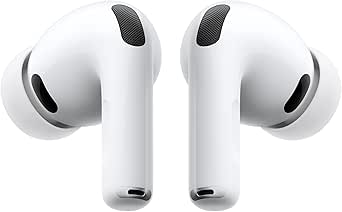 | Best Overall | Audio: Three-dimensional audio, Adaptive EQ, Audio Sharing | Noise control: Active Noise Cancellation | Listening time: Up to 8 hours with ANC | VIEW LATEST PRICE | See Our Full Breakdown |
| Apple AirPods 4 Wireless Earbuds | 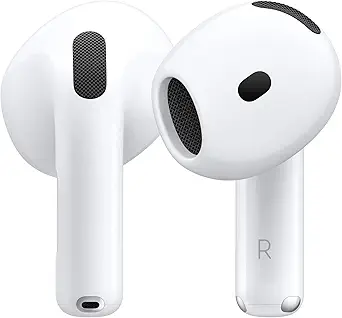 | Best Open-Fit Spatial Audio | Chip: Apple H2 | Spatial audio: Personalized Spatial Audio with dynamic head tracking | Listening time per charge: Up to 5 hours | VIEW LATEST PRICE | See Our Full Breakdown |
| Beats Studio Buds+ True Wireless Noise Cancelling Earbuds, Transparent |  | Best for Apple and Android Compatibility | Connectivity: Class 1 Bluetooth | Listening time: Up to 36 hours | Noise control: Active Noise Cancelling and Transparency modes | VIEW LATEST PRICE | See Our Full Breakdown |
| havit Space T1 Wireless Earbuds with Adaptive Hybrid ANC |  | Best for Multipoint and Long Case Playback | Model: TW983 | Fit: Semi-in-ear | Spatial audio: Head-tracked; unavailable while adaptive ANC is active | VIEW LATEST PRICE | See Our Full Breakdown |
| wireless earbuds with spatial audio | Spatial audio | Noise control | Listening time | Ear tips |
|---|---|---|---|---|
| Apple AirPods Pro 3 Wireless E | — | Active Noise Cancellation | Up to 8 hours with ANC | Five sizes |
| Apple AirPods 4 Wireless Earbu | Personalized Spatial Audio with dynamic head tracking | — | — | — |
| Beats Studio Buds+ True Wirele | Supported | Active Noise Cancelling and Transparency modes | Up to 36 hours | Four sizes |
| havit Space T1 Wireless Earbud | Head-tracked; unavailable while adaptive ANC is active | — | — | — |
More Details on Our Top Picks
Apple AirPods Pro 3 Wireless Earbuds with Active Noise Cancellation
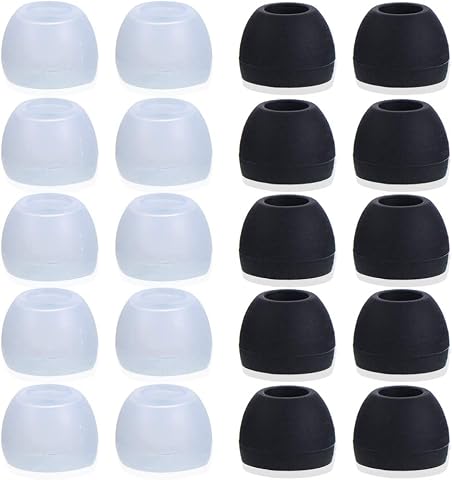
The AirPods Pro 3 are my strongest all-round recommendation for a buyer who wants spatial audio as part of a fuller listening setup. Their three-dimensional audio is paired with active noise cancellation and Adaptive EQ, so the appeal is not limited to an immersive effect: they also offer noise control and sound adjustment for everyday listening. Five ear tip sizes give more room to find a secure seal than the semi-in-ear AirPods 4 or havit Space T1.
Compared with the Beats Studio Buds+, the AirPods Pro 3 have a more clearly specified spatial-audio and personalization package, but they are a less natural recommendation for someone who regularly switches between Android and Apple devices. Automatic Switching and several listed capabilities rely on Apple hardware; Live Translation and Workout Buddy additionally require Apple Intelligence. If those extras are not relevant, the Beats provide broader platform flexibility.
For workouts, heart rate sensing and tracking across up to 50 workout types distinguish this model from the other three. The tradeoff is that its headline listening figure is up to eight hours per charge with ANC on, while the other products publish longer totals including their cases. Those figures describe different usage conditions, so I would choose the Pro 3 for their combination of immersive audio, ANC, and Apple integration rather than assume they lead on total battery endurance.
Pros:- Three-dimensional audio with Adaptive EQ
- Active Noise Cancellation
- Five ear tip sizes for a more adjustable seal
- Heart rate sensing and workout tracking for up to 50 workout types
Cons:- Several features require an iPhone or other Apple devices
- Live Translation and Workout Buddy require Apple Intelligence
- Up to eight hours of listening per charge with ANC on is a different and shorter measure than rivals’ case-inclusive totals
Best for: Apple users who want three-dimensional audio, active noise cancellation, multiple ear tip sizes, and workout or hearing features in one pair.
Not ideal for: Android-first listeners, buyers who do not need Apple-specific extras, or anyone prioritizing the longest stated total playback time with the case.
- Audio:Three-dimensional audio, Adaptive EQ, Audio Sharing
- Noise control:Active Noise Cancellation
- Listening time:Up to 8 hours with ANC
- Transparency listening time:Up to 10 hours using the Hearing Aid feature
- Ear tips:Five sizes
- Health features:Heart rate sensing, hearing test, Hearing Aid, Hearing Protection
- Workout tracking:Up to 50 workout types
- Apple features:Automatic Switching; Live Translation enabled by Apple Intelligence
Our verdict“I recommend AirPods Pro 3 to Apple users who want spatial audio and ANC together, provided their ecosystem dependence and per-charge battery figure suit them.”
Apple AirPods 4 Wireless Earbuds
The AirPods 4 make the most sense for someone drawn to spatial audio but reluctant to use silicone tips. Their redesigned fit is described as comfortable and stable, and the standout audio feature is personalized spatial audio with dynamic head tracking. That gives this model a more specifically described spatial-audio experience than the Beats Studio Buds+, whose supplied details say spatial audio is supported but do not specify head tracking.
The open, semi-in-ear approach changes the listening experience in practical ways. It may feel less occlusive than the sealed fit of the Pro 3 or Beats, but it also does not promise the same kind of isolation as an in-ear design with tips. For listeners who want noise cancellation as part of the purchase, the Pro 3 and Beats list ANC, while the supplied AirPods 4 description does not. I would treat the AirPods 4 as a comfort and spatial-audio pick, not a noise-control choice.
Battery life is another clear compromise: Apple lists up to five hours per charge and up to 30 hours with the USB-C case. That total is less than the listed Beats and havit figures. In return, the H2 chip, Voice Isolation, IP54 rating, and dynamic head tracking provide a focused package for Apple users who prefer an open fit. Some features require a compatible Apple device, so buyers outside that ecosystem should compare the cross-platform Beats first.
Pros:- Personalized Spatial Audio with dynamic head tracking
- Redesigned fit intended for comfort and stability
- Up to 30 hours total listening time with the USB-C case
- IP54 dust, sweat, and water resistance
Cons:- Up to five hours of listening per charge
- The open fit may isolate less than sealed in-ear options
- Some features require a compatible Apple device
Best for: Apple users who want dynamic head tracking and personalized spatial audio in a semi-open fit without ear tips.
Not ideal for: Listeners who need listed active noise cancellation, a sealed fit, longer per-charge playback, or full access to Apple-specific features on another platform.
- Chip:Apple H2
- Spatial audio:Personalized Spatial Audio with dynamic head tracking
- Listening time per charge:Up to 5 hours
- Total listening time:Up to 30 hours with charging case
- Charging case:USB-C
- Water and dust resistance:IP54
- Call feature:Voice Isolation
- Device support:Some features require a compatible Apple device
Our verdict“I would choose AirPods 4 over the Pro 3 when an open fit and head-tracked spatial audio matter more than listed ANC and longer per-charge listening.”
Beats Studio Buds+ True Wireless Noise Cancelling Earbuds, Transparent
The Beats Studio Buds+ are the easiest recommendation here for buyers who do not want their earbuds tied closely to one phone brand. They support spatial audio, include both Active Noise Cancelling and Transparency modes, and are described as compatible with Apple and Android devices. That combination makes them a flexible everyday option, especially for a household or work setup that uses more than one platform.
There is a distinction between broad compatibility and the most detailed spatial feature set. The AirPods 4 explicitly list personalized spatial audio with dynamic head tracking, and AirPods Pro 3 list three-dimensional audio with Adaptive EQ. Beats are listed as supporting spatial audio, but the supplied details do not specify personalization or head tracking. I would choose Beats for platform flexibility and practical noise modes, rather than assuming they match Apple’s stated tracking features.
The four included ear tip sizes help buyers tune fit, and the pocket-sized case supports up to 36 hours of stated listening time. That is more than the AirPods 4’s case-inclusive figure, though less than havit’s listed 40.5 hours. The IPX4 rating covers sweat and water resistance, while the Pro 3 and AirPods 4 are listed at IP54 for dust as well. Three voice-targeting microphones support calls, but the product information does not provide a specific call-duration figure. This is a balanced pick when switching platforms matters more than having the most explicit spatial-audio specification.
Pros:- Spatial audio support with ANC and Transparency modes
- Compatible with Apple and Android devices
- Up to 36 hours of listening time
- Four ear tip sizes and three voice-targeting microphones
Cons:- Supplied details do not specify dynamic head tracking
- IPX4 water resistance does not list dust protection
- No per-charge listening figure is provided in the supplied specifications
Best for: Listeners who use Apple and Android devices and want spatial audio, ANC, Transparency mode, and several ear tip options.
Not ideal for: Buyers specifically seeking documented dynamic head tracking, dust resistance, or the most extensive Apple-only audio and health features.
- Connectivity:Class 1 Bluetooth
- Listening time:Up to 36 hours
- Noise control:Active Noise Cancelling and Transparency modes
- Water resistance:IPX4
- Microphones:Three voice-targeting microphones
- Spatial audio:Supported
- Ear tips:Four sizes
- Device compatibility:Apple and Android devices
Our verdict“I recommend Beats Studio Buds+ to cross-platform listeners who want spatial audio and noise modes without committing to Apple-specific device features.”
havit Space T1 Wireless Earbuds with Adaptive Hybrid ANC
The havit Space T1 stand out for putting head-tracked spatial audio, adaptive hybrid ANC, and Bluetooth multipoint in the same feature list. Multipoint can be useful for someone moving between two paired devices, and the stated up to 40.5 hours with the case is the longest total in this group. The semi-in-ear design also offers an alternative to the sealed tips on the Pro 3 and Beats, while IP54 adds listed dust and water resistance.
The central tradeoff changes how I rank them: spatial audio and adaptive ANC cannot be used at the same time. A buyer has to pick between the immersive mode and the noise-cancelling mode, whereas the AirPods Pro 3 and Beats list spatial audio alongside ANC without that stated restriction. This makes the havit less suitable for flights or busy commutes when the goal is to shut out noise while keeping spatial playback active.
Its semi-in-ear fit may be appealing if silicone tips feel uncomfortable, but it can provide less noise isolation than a sealed in-ear design. The six-microphone call noise reduction and up to nine hours per charge are useful supporting specifications, though the spatial/ANC limitation remains more important to the buying decision. Compared with AirPods 4, havit lists multipoint and a longer case-inclusive battery figure; compared with Beats, it specifies head tracking but has the mode conflict. I see this as a feature-rich alternative for buyers who value connectivity and endurance and accept switching modes.
Pros:- Head-tracked spatial audio
- Bluetooth 6.0 multipoint for two paired devices
- Up to 40.5 hours of playback with the case
- IP54 water and dust resistance with six-microphone call noise reduction
Cons:- Spatial audio and adaptive ANC cannot operate at the same time
- Semi-in-ear fit may isolate less than sealed in-ear models
- LHDC support depends on a compatible device
Best for: Listeners seeking head-tracked spatial audio, multipoint pairing, IP54 protection, and long stated case-inclusive playback in a semi-in-ear design.
Not ideal for: Buyers who want spatial audio and ANC simultaneously, or who need the stronger isolation commonly associated with a sealed in-ear fit.
- Model:TW983
- Fit:Semi-in-ear
- Spatial audio:Head-tracked; unavailable while adaptive ANC is active
- Noise cancellation:Adaptive hybrid ANC, up to -35±3 dB
- Playback time:Up to 9 hours per charge; up to 40.5 hours with case
- Connectivity:Bluetooth 6.0; multipoint for two paired devices
- Audio support:Hi-Res Wireless Audio and LHDC on compatible devices
- Water and dust resistance:IP54
- Microphones:Six with AI ENC
Our verdict“I recommend havit Space T1 to buyers who value multipoint and long case playback, and can accept choosing between spatial audio and ANC.”
How We Picked
I ranked these four models around the promise in the title: wireless earbuds that offer spatial audio. A feature name alone does not tell a buyer whether a model is a good fit, so I looked at the supplied descriptions for the kind of spatial listening each one supports, including dynamic head tracking where specified, and how that experience fits alongside noise control and daily use.
My top position goes to the AirPods Pro 3 because the listed three-dimensional audio sits alongside active noise cancellation, Adaptive EQ, and five ear tip sizes. That makes them the broadest fit for someone seeking an immersive listening setup with a sealed in-ear design and Apple ecosystem features. I place the AirPods 4 next because their personalized spatial audio and dynamic head tracking are explicit strengths, though their open fit and shorter per-charge playback suit different priorities.
The Beats Studio Buds+ rank as the compatibility pick. They support spatial audio and are described as compatible with both Apple and Android devices, while their four tip sizes, ANC, Transparency mode, and up to 36 hours of listening with the case make them versatile. The supplied information does not specify dynamic head tracking for Beats, so I do not treat them as equivalent to the AirPods models on that point.
The havit Space T1 earn a place for their stated head tracking, multipoint connectivity, IP54 rating, and up to 40.5 hours including the case. Their key compromise is unusually direct: spatial audio and adaptive ANC cannot be active together. I also accounted for fit and ecosystem constraints, distinguishing the semi-in-ear havit and AirPods 4 from sealed tip designs, and noting when Apple features require compatible devices. I use the supplied specifications and descriptions as the basis for these comparisons; I do not imply hands-on testing.
| wireless earbuds with spatial audio | Noise control | Listening time | Ear tips | Spatial audio |
|---|---|---|---|---|
| Apple AirPods Pro 3 Wireless E | Active Noise Cancellation | Up to 8 hours with ANC | Five sizes | — |
| Apple AirPods 4 Wireless Earbu | — | — | — | Personalized Spatial Audio with dynamic head tracking |
| Beats Studio Buds+ True Wirele | Active Noise Cancelling and Transparency modes | Up to 36 hours | Four sizes | Supported |
| havit Space T1 Wireless Earbud | — | — | — | Head-tracked; unavailable while adaptive ANC is active |
Factors to Consider When Choosing Wireless Earbuds With Spatial Audio
I would start with the kind of spatial audio and listening setup you actually want. The four models differ in how specifically they describe spatial features, whether you can combine them with ANC, and how strongly they depend on Apple devices.Check what spatial audio means on each product
Spatial audio can describe a broad sense of placement or a more specific feature such as personalized playback with head tracking. In this group, AirPods 4 explicitly list personalized spatial audio with dynamic head tracking, and havit lists head-tracked spatial audio. AirPods Pro 3 list three-dimensional audio, while Beats list spatial audio support without a head-tracking detail in the supplied specifications. If head movement response is a deciding feature, focus on the first two descriptions rather than treating every use of “spatial” as interchangeable.
Also check whether the source content and connected device support the feature you want. The havit listing ties LHDC to compatible devices, and Apple identifies some AirPods features as requiring compatible Apple devices. A feature on an earbud does not guarantee that every phone, app, or audio track will use it in the same way.
Decide whether you need ANC at the same time
Noise cancellation can matter as much as spatial playback on a commute or in a shared workspace. AirPods Pro 3 and Beats Studio Buds+ list ANC alongside spatial audio. The havit Space T1 have both features, but their description says they cannot run at once. That is a meaningful use-case split: choose havit if switching between modes is acceptable; consider Beats or Pro 3 if you want noise control available while using immersive audio.
AirPods 4 are the open-fit alternative in this roundup, and the supplied details do not list ANC for them. Their appeal is personalized head tracking and a fit without silicone ear tips. I would not select them expecting the isolation or noise-control modes offered by the other picks.
Match the fit to your comfort and isolation needs
The AirPods 4 and havit Space T1 use semi-in-ear approaches, while AirPods Pro 3 and Beats include multiple sizes of ear tips. An open or semi-in-ear fit can suit listeners who dislike a sealed feeling, but may let in more surrounding sound. A tip-based design gives more opportunity to create a seal, which can support passive isolation and the intended effect of ANC when the fit is right.
Fit is personal, so the listed tip counts are useful clues rather than guarantees. AirPods Pro 3 include five sizes and Beats include four. If you have had trouble keeping earbuds secure, those options provide more sizes to try than an open-fit design, though I would still prioritize the feel and stability that work for your ears.
Compare battery figures on the same basis
Battery claims here use different measures. AirPods Pro 3 list up to eight hours per charge with ANC on; AirPods 4 list up to five hours per charge and up to 30 hours with the case. Beats give a total of up to 36 hours, and havit lists up to nine hours per charge and up to 40.5 hours with its case. Do not compare a per-charge figure directly with a case-inclusive total.
If you listen in long stretches away from charging, per-charge runtime matters most. If you can return the earbuds to the case between sessions, the total may better reflect your day. ANC and other active features can also affect actual listening time, so I would treat the maximum figures as an upper bound rather than a promise of identical performance in every mode.
Choose for your phone ecosystem and daily features
For Apple users, AirPods Pro 3 offer Automatic Switching and listed hearing, health, and workout tools; AirPods 4 integrate the H2 chip, Voice Isolation, and personalized audio. Some functions need compatible Apple devices, and Live Translation and Workout Buddy require Apple Intelligence. Those capabilities can make the AirPods more useful if you already use the relevant hardware, but less compelling if you do not.
Beats Studio Buds+ are the clearest cross-platform option in the supplied descriptions, with Apple and Android compatibility. The havit adds Bluetooth 6.0 multipoint for two paired devices, which suits people switching between a computer and phone. Pick based on the devices you actually use: ecosystem handoff, broad platform support, and multipoint solve different problems.
Frequently Asked Questions
Which earbuds in this roundup specify dynamic head tracking?
The Apple AirPods 4 list personalized spatial audio with dynamic head tracking, and the havit Space T1 list head-tracked spatial audio. AirPods Pro 3 are described as offering three-dimensional audio, while Beats Studio Buds+ list spatial audio support without a head-tracking detail in the supplied specifications. If the head-tracking feature itself is your priority, those differences are more useful than the shared spatial-audio label.
Can I use spatial audio and ANC together on all four models?
No. The havit Space T1 description explicitly says spatial audio and adaptive ANC cannot be used at the same time. AirPods Pro 3 and Beats Studio Buds+ list spatial audio alongside ANC, without that same stated restriction. AirPods 4 are described with spatial audio and dynamic head tracking, but the supplied information does not list ANC.
Which option is most suitable for Android users?
The Beats Studio Buds+ are the clearest choice for Android users in this comparison because the supplied description explicitly says they are compatible with Apple and Android devices. The AirPods models have features that require compatible Apple devices, while havit lists Bluetooth connectivity and LHDC support on compatible devices. Check your phone’s support for any codec or advanced feature you intend to use.
Which earbuds have the longest stated battery life?
The havit Space T1 list up to 40.5 hours with the charging case, followed by Beats Studio Buds+ at up to 36 hours and AirPods 4 at up to 30 hours. AirPods Pro 3 list up to eight hours per charge with ANC on, which is not a case-inclusive total. These figures use different measures and depend on listening modes, so compare per-charge runtime with per-charge runtime and case totals with case totals.
Are open-fit earbuds a good choice if I want noise isolation?
An open or semi-in-ear design can be more comfortable for someone who dislikes silicone tips, but it may let in more outside sound than a sealed fit. AirPods 4 and havit Space T1 use semi-in-ear designs; AirPods Pro 3 and Beats include multiple ear tip sizes and list ANC. If isolation is a main goal, I would start with a tip-based model and confirm that its fit works for you.
Conclusion
For the broadest Apple-focused package, I would choose AirPods Pro 3: they pair three-dimensional audio with ANC, multiple tip sizes, and health and workout features, with Apple-device requirements as the main caveat. Choose AirPods 4 if dynamic head tracking and an open fit matter more than noise cancellation or longer per-charge playback.
If you move between Android and Apple devices, Beats Studio Buds+ offer the most straightforward cross-platform fit while still including spatial audio and ANC. For multipoint pairing, IP54 protection, and the longest stated case-inclusive battery figure, havit Space T1 are the distinctive alternative; they make sense if you are comfortable switching between spatial audio and ANC modes. The right pick depends on which tradeoff matters most: ecosystem features, fit, simultaneous noise control, or battery and connectivity.