

TL;DR

Get movie nights delivered free — and shop member deals
- Fast, free delivery on millions of items
- Access to Prime Big Deal Days deals on October 6–7
- Prime Video, Amazon Music and more included
A new Atlantic interview with director Zach Cregger, who is helming a 2026 Resident Evil film, has renewed attention on why video game adaptations are so difficult to translate to screen. The piece frames interactivity — the player’s own agency — as the core thing a movie cannot reproduce.
A new The Atlantic interview with Zach Cregger, the director behind an upcoming Resident Evil film, has put a spotlight on one of Hollywood’s most persistent challenges: why video games are so difficult to adapt into movies and television. The piece, headlined “Adapting a Video Game Might Be Harder Than Playing It,” argues that the obstacle is not visuals or story but something more fundamental — the interactive experience that defines gaming and that a passive screen format cannot recreate.
Cregger, best known for the 2022 horror film Barbarian, is attached to a new film adaptation of Capcom’s Resident Evil franchise, one of the most adapted game properties in Hollywood history. His comments to The Atlantic come as studios continue to pour resources into game-based projects, treating recognizable gaming brands as valuable intellectual property at a time when original franchises are scarce.
The Atlantic’s central argument is structural: video games are built around player agency. A game like Resident Evil derives its tension from the player’s own decisions — when to fight, when to flee, how to manage scarce resources. A film, by contrast, hands that experience to a viewer who watches someone else make those choices. What feels terrifying when you are holding the controller can feel inert when you are holding nothing at all.
The interview adds to a broader industry conversation. Recent years have produced both widely praised game adaptations and high-profile failures, and studios have responded by courting directors with strong genre credentials — like Cregger — rather than treating game properties as pure branding exercises. The Resident Evil franchise itself has cycled through multiple film incarnations with mixed critical and commercial results, making each new attempt a test of whether the adaptation problem can be solved.
From Console To Screen: The Challenge Of Video Game Adaptations
A new Atlantic interview with director Zach Cregger — helming a 2026 Resident Evil film — renews attention on why video game adaptations are so difficult. The obstacle isn’t visuals or story: it’s interactivity, the player’s own agency, which a passive screen format cannot reproduce.
Played, Not Watched
The Atlantic’s piece — “Adapting a Video Game Might Be Harder Than Playing It” — argues the barrier is built into the medium itself. Failed adaptations were long blamed on weak writing or cheap production; the newer argument is that games derive their emotional weight from the player’s own participation.
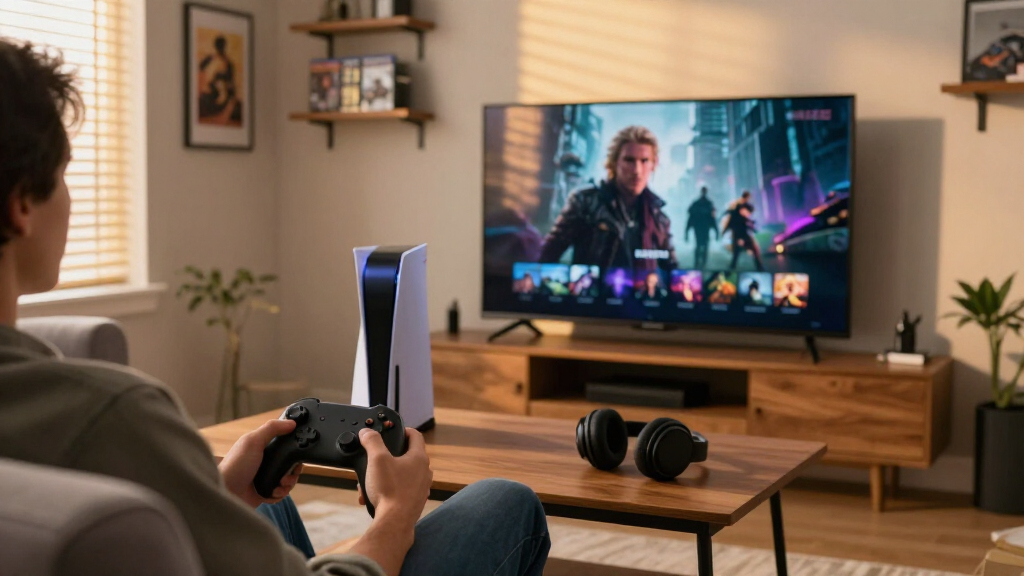
You Hold the Controller
A game like Resident Evil builds tension from the player’s own decisions — when to fight, when to flee, how to manage scarce resources. The audience makes the choices and feels the consequences. Fear is personal.
You Hold Nothing at All
A film hands that experience to a viewer who watches someone else make those choices. What feels terrifying when you are in control can feel inert when the agency belongs entirely to someone on screen.
The Adaptation Gap
The chain below traces how the core experience of a game transforms — and erodes — as it moves from console to screen.
🎮 Player Agency
The player decides: fight, flee, explore, conserve. Every scare is earned through their own actions.
🎬 Director Takes Over
A filmmaker like Cregger must translate those choices into a single fixed narrative for a passive viewer.
🎞️ Passive Viewing
Decisions become spectacle. The viewer watches consequences unfold without personal stakes.
⚖️ Verdict
Success or failure becomes a data point in an industry-wide experiment: can interactivity convert into compelling passive storytelling?
Resident Evil’s Long Screen History
One of the most adapted game properties in Hollywood history, with results that have divided critics and fans at every incarnation.
| Year | Milestone | Significance |
|---|---|---|
| 1996 | Original game (Capcom) | Establishes the survival-horror genre and spawns one of gaming’s most lucrative franchises. |
| 2002 | Film series launches | Hollywood adapts the property almost immediately, beginning a long-running series with mixed reception. |
| 2021 | Reboot film | A fresh attempt after the original series, alongside various television projects. |
| 2026 | Cregger’s Resident Evil | The latest test of whether a director-driven, horror-literate approach can solve the adaptation problem. |
An Industry-Wide Experiment
Studios — major streamers and legacy film companies alike — have committed substantial budgets to game adaptations, betting established fan bases translate into audiences, at a time when original franchises are scarce.
Adapting a Video Game Might Be Harder Than Playing It. — The Atlantic, September 2026
At A Glance
Who is directing the new film?
Zach Cregger, director of the 2022 horror film Barbarian, is helming the upcoming Resident Evil adaptation discussed in The Atlantic’s September 2026 interview.
Why are adaptations so difficult?
Games derive their power from player agency — the audience makes choices and feels the consequences. Films and shows are passive, so the core experience does not transfer directly to screen.
Has Resident Evil been adapted before?
Yes — multiple times, starting with a film series launched in 2002, followed by a 2021 reboot and television projects, with varying critical and commercial results.
When does the film arrive?
The film is associated with a 2026 timeframe. Exact release details were not confirmed in available reporting, so timing may change as production and marketing proceed.
What Cregger’s Film Still Has to Prove
The full interview text could not be extracted, so Cregger’s remarks are paraphrased only at a general level. What remains unknown:
Which era of the games?
It is unclear which period of the Resident Evil canon the film draws from, or how closely it follows existing storylines.
Structural deviation?
Whether the film breaks from previous screen versions in structure and approach remains to be seen. Additional casting and release-date announcements are expected as production advances.
What Cregger’s Take Reveals About Adaptation
The significance of The Atlantic’s piece lies in what it identifies as the real barrier. For years, failed game adaptations were blamed on weak writing, cheap production, or studios ignoring fans. The newer argument — echoed in Cregger’s involvement — is that the problem is built into the medium itself: games are played, not watched, and the emotional weight of a game comes from the player’s own participation.
This matters commercially as well as artistically. Studios including major streamers and legacy film companies have committed substantial budgets to game adaptations, betting that established fan bases will translate into audiences. Each project that succeeds — or stumbles — becomes a data point in an ongoing industry-wide experiment about whether interactivity can be converted into compelling passive storytelling, or whether the two forms are fundamentally mismatched.
Resident Evil’s Long Screen History
Capcom released the original Resident Evil game in 1996, establishing the survival-horror genre and spawning one of gaming’s most lucrative franchises. Hollywood adapted it almost immediately, producing a long-running film series beginning in 2002, followed by a reboot in 2021 and various television projects.
Those adaptations have historically divided critics and fans, with common complaints centered on fidelity to the games’ atmosphere and characters. The new film, directed by Cregger, represents the latest attempt to capture the property on screen, arriving at a moment when the broader wave of game adaptations — across streaming and theatrical release — has raised audience expectations considerably.
“Adapting a Video Game Might Be Harder Than Playing It”
— The Atlantic
What Cregger’s Film Still Has to Prove
The full text of The Atlantic’s interview could not be extracted for this article, so specific quotations from Cregger are not reproduced here, and details of his stated approach are paraphrased only at a general level. Readers should consult the original interview for his direct remarks.
It also remains unclear how the new Resident Evil film will resolve the adaptation problem in practice — which era of the games it draws from, how closely it follows existing canon, and whether it deviates structurally from previous film versions. No confirmed release details beyond the film’s 2026 timeframe were established in the available material.
The Release That Will Test the Theory
The next milestone is the release of Cregger’s Resident Evil film, expected in 2026. Its reception — among critics, general audiences, and long-time fans of the games — will offer the clearest evidence yet of whether a director-driven, horror-literate approach can succeed where earlier adaptations struggled.
Beyond this film, the adaptation wave shows no sign of slowing, and industry observers will be watching whether studios continue favoring filmmakers with genre credentials for game properties. Additional casting, marketing, and release-date announcements for the Resident Evil project are expected as production advances.
Source: The Atlantic
Key Questions
Who is directing the new Resident Evil film?
Zach Cregger, the director of the 2022 horror film Barbarian, is helming the upcoming Resident Evil adaptation, which The Atlantic discussed in a September 2026 interview.
Why are video game adaptations considered difficult?
As The Atlantic’s piece argues, games derive their power from player agency — the audience makes the choices and feels the consequences. Films and shows are passive, so the core experience of a game does not transfer directly to the screen.
Has Resident Evil been adapted before?
Yes. The franchise has been adapted multiple times, starting with a film series launched in 2002, followed by a 2021 reboot and television projects, with varying critical and commercial results.
When does the new Resident Evil film come out?
The film is associated with a 2026 timeframe. Exact release details were not confirmed in the available reporting, so timing may change as production and marketing proceed.
Source: The Atlantic
Fall Picks
fall essentials
As an affiliate, we earn on qualifying purchases.