
TL;DR

Get movie nights delivered free with Prime
- Fast, free delivery on millions of items
- Prime Video, Amazon Music and more included
- Member-only deals all year
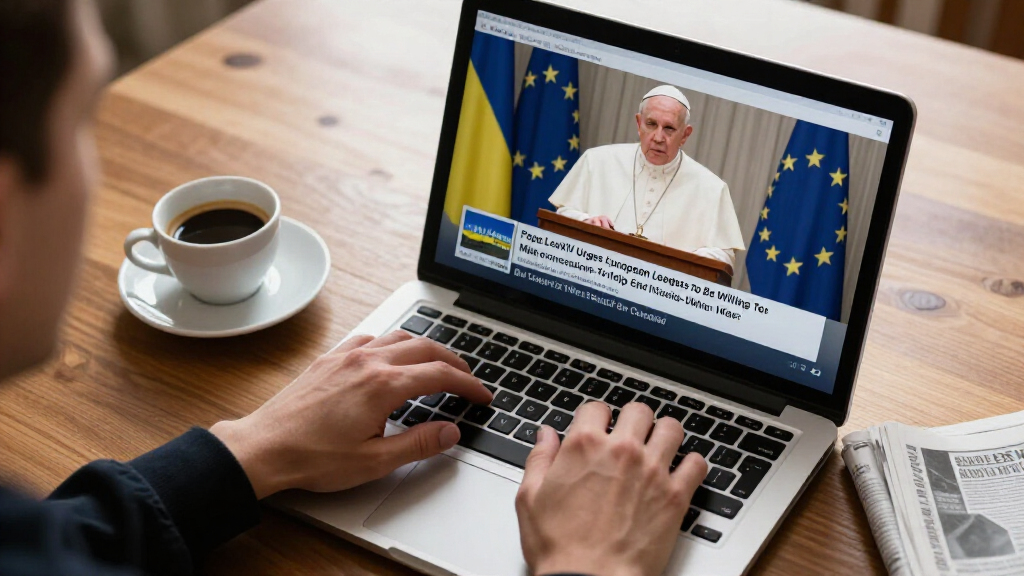
Pope Leo XIV, speaking during a visit to France, urged European leaders to be willing to make concessions to end Russia’s war against Ukraine, warning against the ‘illusion’ that rearmament brings peace. He did not specify what concessions he meant, and Russia has previously rejected Vatican-hosted talks.
Pope Leo XIV has urged European leaders working to end Russia’s war against Ukraine to be prepared to make concessions for the sake of peace, warning them against the “illusion that rearmament is the answer.” The pontiff made the remarks during a visit to France on Sunday, according to a report by Meduza, but he did not specify what he meant by the positions he suggested giving up.
Addressing the question of how the war might be ended, Leo XIV said leaders needed resolve at the negotiating table. “We need to show courage in negotiation and to be willing to give up some positions for the greater good of peace,” he said, according to Meduza’s report. He drew a parallel to a 1917 appeal by Pope Benedict XV during World War I, when the Vatican similarly called on warring powers to compromise for peace.
The pope did not spell out what he meant by “some positions” — leaving open whether he was referring to territorial questions, security arrangements, sanctions, or other elements of a potential settlement. His silence on specifics means the remarks can be read differently by Kyiv, Moscow, and European governments.
Speaking later aboard the papal plane on his return to Rome, Leo XIV again called on Russia and Ukraine to sit down for talks. Without naming any individual, he criticized leaders who “begin talking about nuclear weapons and wars that are becoming increasingly destructive,” and said the Catholic Church must always call for peace, according to Meduza.
Why the Pope’s Concession Appeal Matters
The remarks put the head of the Catholic Church directly at odds with the prevailing direction of European policy. The European Union and its member states have been expanding defense spending and rearmament programs since Russia’s full-scale invasion of Ukraine, and the pope’s warning that rearmament may be an “illusion” challenges the logic underpinning those budgets.
For Ukraine, calls for concessions are politically sensitive: Kyiv has insisted that any peace must respect its territorial integrity and that pressure to compromise should not reward Russian aggression. The pope’s intervention, coming from a neutral religious actor with diplomatic weight, adds a prominent voice to the debate over whether negotiation or military strength should drive efforts to end the war — without specifying how the two could be reconciled.
Top picks for "pope european leader"
As an affiliate, we earn on qualifying purchases.
The Vatican’s Record on the War
Leo XIV has called for a swift end to the war since the start of his papacy. In his first Sunday sermon after his election in May 2025, he appealed for the release of prisoners of war and for children taken from Ukraine to Russia to be returned to their families, Meduza reports.
Like his predecessor Pope Francis, Leo XIV has repeatedly offered the Vatican as a venue for direct talks between Kyiv and Moscow. Russia rejected the idea, with Foreign Minister Sergey Lavrov citing Russia and Ukraine’s status as “predominantly Orthodox countries” as the reason.
Peace talks between Russia and Ukraine were suspended in early March after the United States, which had been mediating, went to war with Iran, according to Meduza. In recent months, both sides have spoken more often about resuming talks, but Moscow has stressed it will not stop fighting while negotiations are underway.
“We need to show courage in negotiation and to be willing to give up some positions for the greater good of peace.”
— Pope Leo XIV
What the Pope Left Unsaid
The pope did not define the concessions he believes European leaders should be willing to make. It is not clear whether he was referring to territorial questions, sanctions policy, security guarantees, or negotiation posture more broadly.
It is also unclear how European governments and Ukraine will respond to the appeal, and whether the remarks will have any practical effect on efforts to restart the suspended talks. The targets of the pope’s criticism about nuclear rhetoric were not named, and no new Vatican peace initiative was announced.
Prospects for Resumed Talks
Both Russia and Ukraine have spoken with increasing frequency in recent months about the need to resume negotiations, though Moscow says it will not halt fighting while they are underway, according to Meduza. Whether the pope’s intervention encourages movement toward talks — or draws pushback from Kyiv or European capitals over the concession language — remains to be seen.
The Vatican is expected to continue offering itself as a venue for dialogue despite Russia’s earlier refusal. Watch for official reactions from European governments, Ukraine, and the Kremlin in the coming days.
Key Questions
What did Pope Leo XIV ask European leaders to do?
He asked them to show “courage in negotiation” and be willing to give up “some positions for the greater good of peace” in order to end Russia’s war against Ukraine.
Did the pope specify what concessions should be made?
No. He did not spell out what he meant by “some positions,” leaving the substance of any potential compromise undefined.
Where and when did the pope make these remarks?
He made them during a visit to France, and repeated his call for talks aboard the papal plane on his return to Rome. The remarks were reported on September 29, 2026.
Has the Vatican offered to mediate between Russia and Ukraine before?
Yes. Both Leo XIV and his predecessor Francis have offered the Vatican as a venue for direct talks. Russia rejected the idea, with Foreign Minister Sergey Lavrov citing both countries’ Orthodox majority populations.
What is the current state of Russia-Ukraine peace talks?
According to Meduza, talks were suspended in early March after the United States, the mediator, went to war with Iran. Both sides have since spoken more about resuming talks, but Moscow says it will not stop fighting during negotiations.
Source: rss
Halloween Picks
halloween
As an affiliate, we earn on qualifying purchases.