

TL;DR

Get movie nights delivered free — and shop member deals
- Fast, free delivery on millions of items
- Access to Prime Big Deal Days deals on October 6–7
- Prime Video, Amazon Music and more included
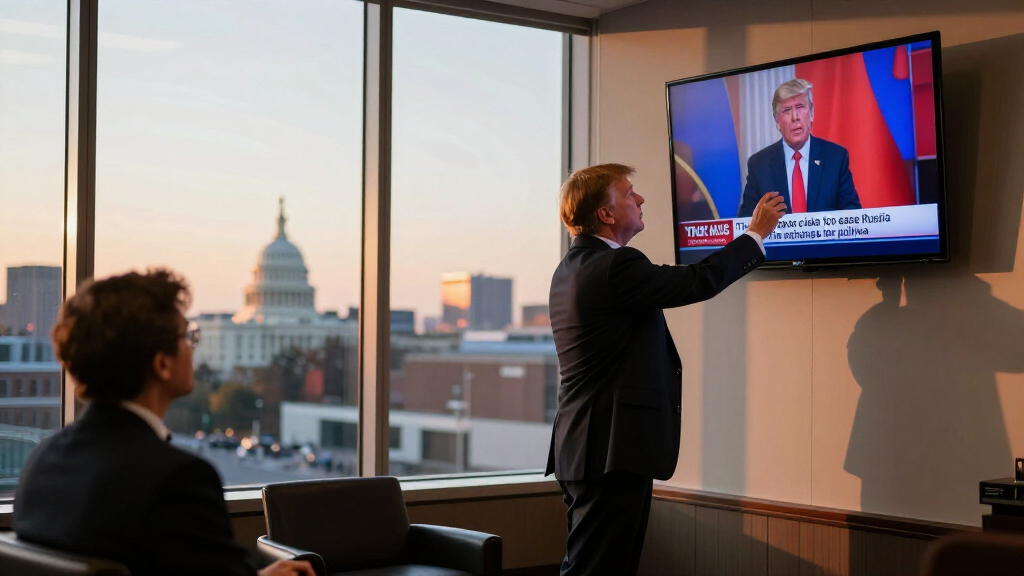
The Atlantic reports that President Donald Trump approved a proposal from special envoy John Coale to explore easing sanctions on Russia in exchange for political-prisoner releases, without waiting for the war in Ukraine to end. The plan is at an early stage; no prisoners, sanctions relief or other U.S. concessions have been identified publicly, and Ukrainian President Volodymyr Zelensky opposes lifting sanctions before the war ends.
U.S. President Donald Trump has approved a proposal to explore easing sanctions on Russia in return for the release of political prisoners, The Atlantic reports, describing a potential diplomatic track that would not wait for the war in Ukraine to end. The proposal, advanced by special envoy John Coale, remains in its early stages, and no specific prisoners or U.S. concessions have been announced.
According to The Atlantic’s Simon Shuster, Coale proposed applying to Moscow an approach he used in Belarus, where he secured the release of about 500 political prisoners in exchange for sanctions relief. The magazine reports that Coale sees prisoner releases and economic ties as possible ways to restart stalled discussions between Washington and Moscow. The account does not establish that Russia has accepted the proposal or that negotiations over a prisoner exchange are underway.
Coale has a list of Americans held in Russian prisons whose cases Washington could raise in future negotiations. He and Dmitry Muratov, former editor-in-chief of Novaya Gazeta and a Nobel Peace Prize laureate, also compiled a separate list of Russian political prisoners, journalists and others convicted for opposing the war. No names have been disclosed, and the report gives no details about the sanctions measures or trade arrangements the United States might offer.
The report connects the idea to separate discussions involving Belarus. Washington and Minsk have begun discussing a major deal to buy Belarusian potash, The Atlantic says, citing Trump’s announcement the previous week. Coale said Russia is involved because European sanctions mean the potash would have to be exported through Russian territory. The potash talks and the proposed Russia prisoner arrangement are related in the account, but the report does not say they form a finalized package.
Sanctions Could Become a Bargaining Tool
The proposal would tie sanctions policy to prisoner releases while Russia’s war against Ukraine continues. That could create a channel for freeing detainees and restarting diplomatic contact, but it would also raise the question of whether Moscow could gain economic relief without changing its conduct in Ukraine. The Atlantic’s account presents those outcomes as possibilities, not as agreed terms.
Ukrainian President Volodymyr Zelensky told Shuster he would do his best to block any attempt to lift sanctions on Russia before the war ends. His position highlights the risk of a dispute between Washington and Kyiv over the timing and purpose of sanctions relief. For families of prisoners, the lists could signal that cases may be raised in future talks, though the report provides no timetable or assurance that any detainees will be released.
There is also a broader leverage concern. Belarusian opposition leader Svetlana Tikhanovskaya warned that easing sanctions after hostage-taking could encourage authorities in Russia and Belarus to detain more people. Her warning is an assessment of the potential consequences; the report offers no evidence that the proposed Russian plan has changed detention policy.
Belarus Deal Informs Russia Proposal
Coale’s proposal draws on his work with Belarus. According to The Atlantic, he helped secure the release of about 500 political prisoners in exchange for sanctions relief. The new idea would adapt that model to Russia, but the report describes it as a proposal still in its early stages, not a completed agreement or an announced negotiation.
The timing matters because the proposal would not make an end to the Ukraine war a precondition for exploring sanctions relief. Shuster writes that such a deal could give Russian President Vladimir Putin a way to signal goodwill and diplomatic progress to Washington without stopping strikes on Ukraine. That is Shuster’s interpretation of the potential political effect, not a stated Russian commitment or an established outcome.
Coale argued that economic ties could help create conditions for peace, telling Shuster: “Economic ties usually result in normality.” Zelensky’s objection and Tikhanovskaya’s warning show why that view is contested. The available report does not provide a response from the Kremlin to the proposal.
“Economic ties usually result in normality.”
— John Coale, as quoted by The Atlantic
Terms and Kremlin Response Unknown
The report does not disclose which prisoners might be included, what sanctions Washington might ease, or whether the Kremlin has received or accepted Coale’s proposal. It also gives no schedule for negotiations and no indication that a prisoner release is imminent. The relationship between the separate Belarusian potash discussions and any Russia deal remains undefined.
It is also unclear how Washington would assess whether a proposed release had been fulfilled, or whether relief would be temporary, reversible or tied to additional steps. The report describes a possible exchange, not agreed terms. Zelensky’s opposition and Tikhanovskaya’s warning underscore that the diplomatic and policy consequences remain disputed.
Watch for Talks and Named Cases
The next signs of progress would be confirmation of direct talks, identification of prisoners whose cases are being raised, or public details about possible sanctions relief. Coale has compiled lists for possible future negotiations, but The Atlantic reports no date for those discussions and no announced agreement.
Further developments may also clarify whether the Belarus potash talks affect Washington’s approach to Moscow. Until officials or the parties involved disclose concrete terms, the proposal remains an early diplomatic initiative, with no confirmed exchange or change in Russia sanctions.
Key Questions
What Russia proposal did Trump approve?
The Atlantic reports that Trump approved exploring a proposal from special envoy John Coale to ease some sanctions on Russia in exchange for releases of political prisoners. The report does not say that an agreement has been reached.
Would sanctions be eased before the Ukraine war ends?
The proposal is described as an approach that would not wait for the war to end. Zelensky told The Atlantic’s Simon Shuster that he would try to block lifting sanctions before the war ends.
Which prisoners or sanctions are involved?
No specific names or possible U.S. concessions have been made public. Coale reportedly has a list of Americans held in Russian prisons, and he and Dmitry Muratov compiled a separate list of Russian political prisoners, journalists and others convicted for opposing the war.
Has Russia agreed to the proposal?
The Atlantic report does not say that Russia has accepted the proposal or that a prisoner exchange is underway. The plan remains at an early stage, and a Kremlin response is not provided.
Why does the proposal face opposition?
Zelensky opposes lifting sanctions before the war ends. Belarusian opposition leader Svetlana Tikhanovskaya warned that trading sanctions relief for releases could weaken Western leverage and encourage authorities to detain more people.
Source: rss
Fall Picks
fall essentials
As an affiliate, we earn on qualifying purchases.