
TL;DR

Get movie nights delivered free with Prime
- Fast, free delivery on millions of items
- Prime Video, Amazon Music and more included
- Member-only deals all year
Mikhail Loshchinin, an IT specialist who left Russia in the late 1990s, was detained at the Latvian border in summer 2025 while traveling to visit his father after a heart attack. He told Meduza he regrets the trip, as he faces treason charges over a 30-euro transfer sent to his ex-girlfriend in Ukraine in 2022. Rights group Memorial has counted at least 40 similar cases of returning Russians ending up behind bars since 2022.
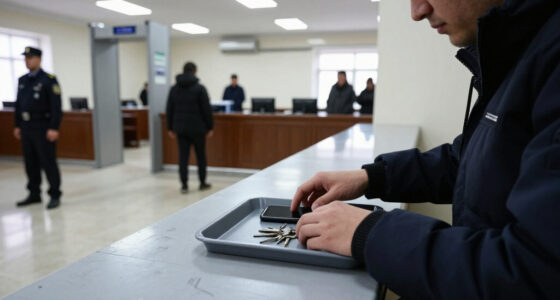
An IT specialist who rode his motorcycle from Europe into Russia in the summer of 2025 to visit his father after a heart attack says he was detained at the border and charged with treason over a 30-euro transfer he sent to a former girlfriend in Ukraine in 2022. Mikhail Loshchinin, who had lived in Europe since the late 1990s, described his situation in a message from pretrial detention published by the independent outlet Meduza on September 29, 2026, as part of a report on Russians who returned home and ended up behind bars.
According to Meduza, Loshchinin was born in Moscow, spent his childhood and youth in Ukraine, and had lived in Europe since the late 1990s. When he crossed the border from Latvia into Russia in the summer of 2025, border guards found many contacts in Ukraine on his phone. He had not deleted anything before traveling, Meduza reported, apparently because he did not think he had anything to hide. He was then detained and charged with treason over the €30 transfer to his ex-girlfriend, sent in 2022.
Writing from pretrial detention, Loshchinin described the consequences of his trip in stark terms. “I lost the best job I ever had, all my money and investments, and my apartment; my abductions have taken a terrible toll on my mother’s health; and I’m rapidly losing my health, my teeth, and my eyesight,” he wrote. He said a deputy head of the investigative department told him he would receive 18 years in prison because he refuses to admit guilt.
Meduza reported that Loshchinin is not an isolated case. The human rights group Memorial has counted at least 40 cases since 2022 in which Russians who left the country returned home and were subsequently imprisoned. The outlet’s report also describes the cases of philosophy instructor Nikolai Zyuzev, sentenced in the Komi Republic to seven years in a penal colony for treason over an educational project on Russia’s Indigenous peoples that the Federal Security Service said was aimed at undermining Russia’s sovereignty, and Alexander Lunyov, a Tomsk homeowner detained in August 2026 and accused of donating 7,000 rubles to Alexey Navalny’s Anti-Corruption Foundation (FBK), an organization designated as extremist in Russia.
Why Returnees Face Growing Risk
The cases illustrate the legal exposure facing Russians abroad who travel home, even for family reasons. Meduza framed its report explicitly as a warning to readers abroad, listing risk factors that include past donations to Ukrainian initiatives or charities, donations to or contact with organizations designated extremist, terrorist, or undesirable in Russia, participation in antiwar or opposition protests, opposition or antiwar social media posts — including deleted ones — and photos from protests abroad or featuring Ukrainian symbols.
The severity of the charges appears disproportionate to the underlying conduct, according to the report: a €30 transfer and a 7,000-ruble donation have formed the basis of treason and extremism investigations that carry multi-year prison terms. Ukrainian citizens, long-term residents of Ukraine, and those who have not checked Russia’s wanted persons database or obtained a certificate of no criminal record through the Gosuslugi portal are also flagged as at risk.
The Cases Behind the Warning
Nikolai Zyuzev is a philosophy Ph.D. who studies Pitirim Sorokin. He moved to Canada in the 2000s, taught there, became a citizen, and returned to work in Komi in the second half of the 2010s. He had lived in Lithuania since 2022 but traveled to his home village of Podyelsk in the summer of 2025; friends told Meduza they do not know exactly why he returned, suggesting perhaps he missed home and thought “no one was particularly interested in him.” After his return he disappeared, and more than a year later it emerged he had been convicted of treason. In a 2023 article for Maclean’s, Zyuzev had said he hoped “demands for decolonization will grow louder and the Kremlin will lose control over the republics.”
Alexander Lunyov became known in 2012 for buying and renovating an abandoned water tower in Tomsk, spending eight years and more than eight million rubles on it. He moved to the Czech Republic in 2022 but told Moskvich Mag in 2025 that he and his wife planned to keep staying in the tower. He was detained in Tomsk in August 2026 after traveling from Prague with his wife and their infant daughter. Singer and blogger Eduard Sharlot, who left for Armenia in 2022 and publicly condemned the invasion, is also among the cases described by Meduza.
“The deputy head of the investigative department says I’ll get 18 years in prison because I won’t admit guilt. Yes, I regret going.”
— Mikhail Loshchinin, writing from pretrial detention
Unverified Details in the Cases
The exact reasons some returnees decided to travel back remain unclear. Meduza reported that friends of Zyuzev do not know precisely why he returned to Podyelsk, and the outlet could only suggest that Lunyov perhaps wanted to introduce his infant daughter to relatives in Russia. The legal outcomes for Loshchinin and Lunyov have not been determined: Loshchinin remains in pretrial detention facing a treason charge, and Lunyov is under criminal investigation for financing extremist activity, which carries up to eight years in prison. Because much of the reporting relies on defense-adjacent accounts, correspondence from detention, and Memorial’s casework, the full picture of how many returnees have been detained — and on what evidence — is difficult to verify independently.
Pending Trials and Sentences
Loshchinin’s treason case remains in the pretrial stage, and he has signaled he will not admit guilt, despite what he described as warnings of an 18-year sentence. Lunyov’s investigation into alleged financing of extremist activity is ongoing in Tomsk. Meduza urged Russians abroad who are considering travel to Russia to check the wanted persons database and obtain a certificate of no criminal record through the Gosuslugi portal before deciding, and to weigh the risk factors the outlet listed. Memorial’s count of at least 40 such cases since 2022 suggests additional cases may surface as detentions become publicly known, often months after the fact, as happened with Zyuzev.
Key Questions
Why was Mikhail Loshchinin detained in Russia?
According to Meduza, border guards found many Ukrainian contacts on his phone when he crossed from Latvia in summer 2025. He was subsequently charged with treason over a 30-euro transfer he sent to his former girlfriend in Ukraine in 2022.
How many similar cases of detained returnees have been documented?
The human rights group Memorial has counted at least 40 cases since 2022 in which Russians who left the country returned home and ended up behind bars, according to Meduza.
What sentence does Loshchinin face?
Loshchinin wrote from pretrial detention that a deputy head of the investigative department said he would get 18 years in prison because he refuses to admit guilt. His case has not yet gone to trial.
What risk factors did Meduza identify for Russians abroad considering travel home?
The outlet listed donations to Ukrainian causes, donations to or contact with organizations designated extremist or undesirable in Russia, participation in antiwar or opposition protests, opposition or antiwar social media posts including deleted ones, photos from protests abroad or featuring Ukrainian symbols, Ukrainian citizenship or long-term residence in Ukraine, and failing to check the wanted persons database or obtain a criminal record certificate via Gosuslugi.
What happened to philosophy instructor Nikolai Zyuzev?
According to Meduza, a court in the Komi Republic sentenced Zyuzev to seven years in a penal colony for treason over a project on Russia’s Indigenous peoples, developed with foreign grants, which the FSB said was aimed at undermining Russia’s sovereignty.
Source: rss
Fall Picks
fall essentials
As an affiliate, we earn on qualifying purchases.